
Collecting health information from camper families shouldn’t feel like a chore, for you or for parents. A well-built summer camp medical form helps you stay organized, respond quickly in emergencies, and keep every camper safe throughout the season.
At Activity Messenger, we help camps manage everything from registration to communication. Here’s how to build a medical form that’s easy for parents to complete and easy for your team to act on.
Key Takeaways:
- Start with the right structure: Divide your form into clear sections so parents can move through it quickly and your team can filter results efficiently.
- Use conditional branching: Show follow-up questions only when relevant, keeping the form short for most families while capturing detail when it matters.
- Mobile-first matters: Most parents will complete the form on their phone. A form that works well on mobile gets done faster and with fewer errors.
- Automate your follow-ups: Chasing parents manually is time-consuming. Set up automated reminders that only go to those who haven’t completed the form yet.
- Make data accessible to staff: Medical information is only useful in an emergency if your team can actually find it. Connect form data to your attendance list for real-time access.
Table of Contents
- 1. Create an Online Medical Form
- 2. How to Customize the Form
- 3. Ensure Emergency Preparedness
- 4. Use Conditional Branching
- 5. Simplify Document Uploads
- 6. Optimize the Parent Experience
- 7. Implement Follow-up Strategies
- 8. Leverage Data for Camp Safety
- Frequently Asked Questions
- Ready to Simplify Your Camp’s Medical Forms?
1. Create an Online Medical Form
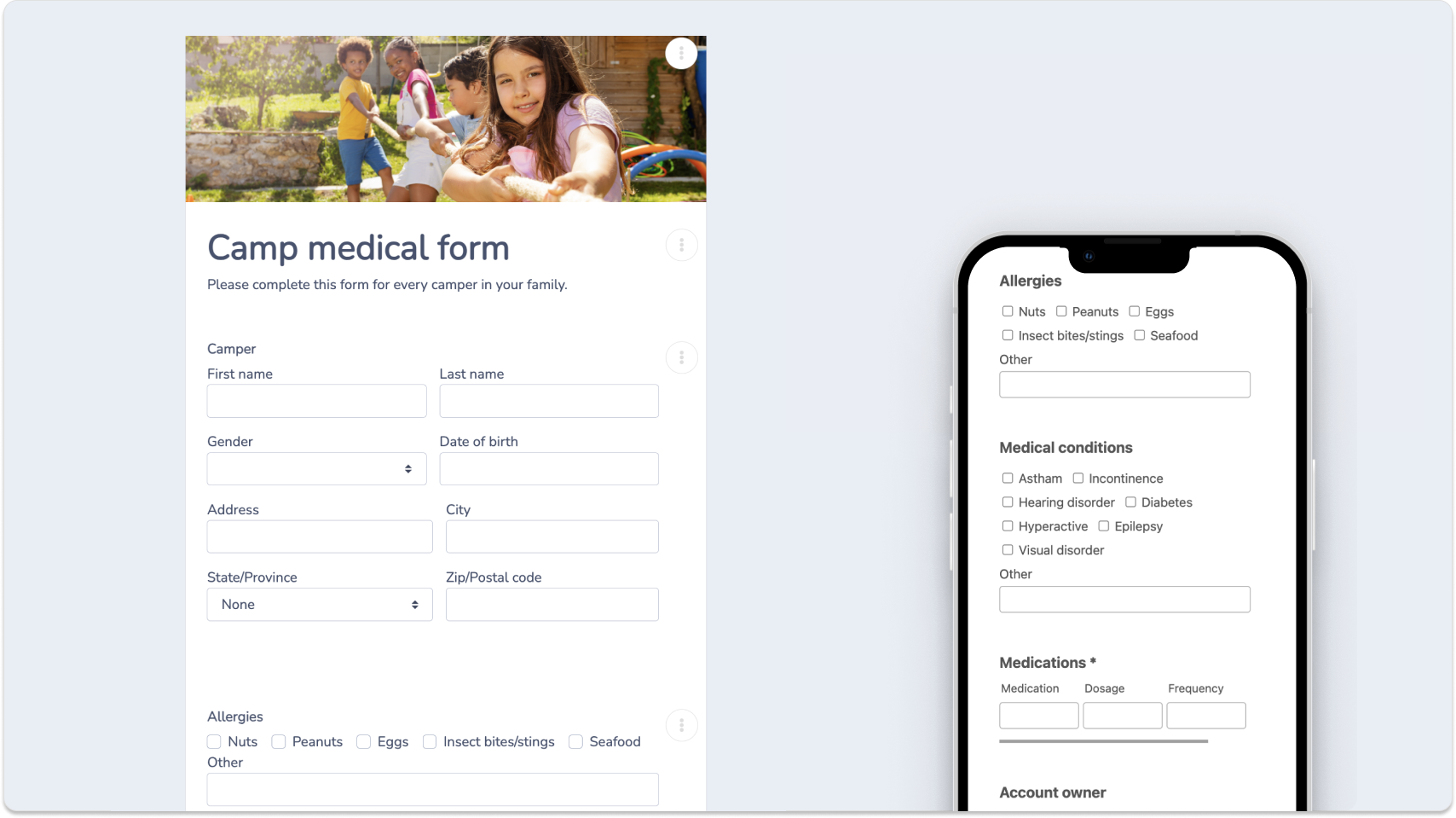
A good summer camp medical form typically covers:
- Basic camper information (name, date of birth, gender, address)
- Medical history and current conditions
- Allergies and severity
- Current medications and dosages
- Immunization records
- Emergency contacts
- Parental consent for emergency treatment
If you’ve already collected basic details during registration, look for a platform that can automatically pre-populate those fields. It reduces redundancy and saves parents time, which means higher completion rates for you.
A platform like Activity Messenger is built with non-technical users in mind. You can drag and drop different question types to build and customize your form without any coding knowledge.
2. How to Customize the Form
A well-organized form is easier for parents to fill out and easier for your team to use. We recommend dividing your medical form into clearly labelled sections:
- Allergies (type, severity, required action)
- Medical conditions (diagnosed conditions, relevant history)
- Medications (name, dosage, administration instructions)
- Immunizations
- Emergency contacts
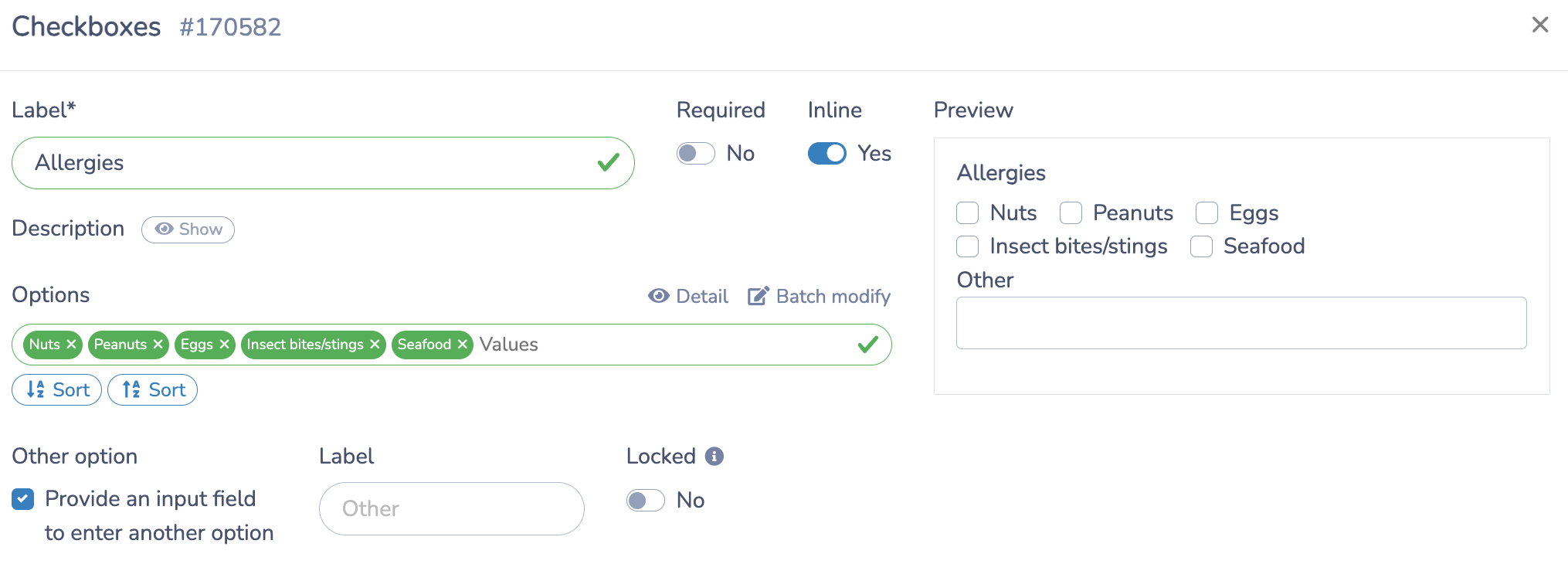
Use dropdowns and checkboxes for common responses. This standardizes your data and lets you quickly filter campers by specific needs, whether you’re preparing for a field trip or responding to an incident.
Always include open-ended fields too. Parents often need space to provide context that a checkbox can’t capture.
3. Ensure Emergency Preparedness
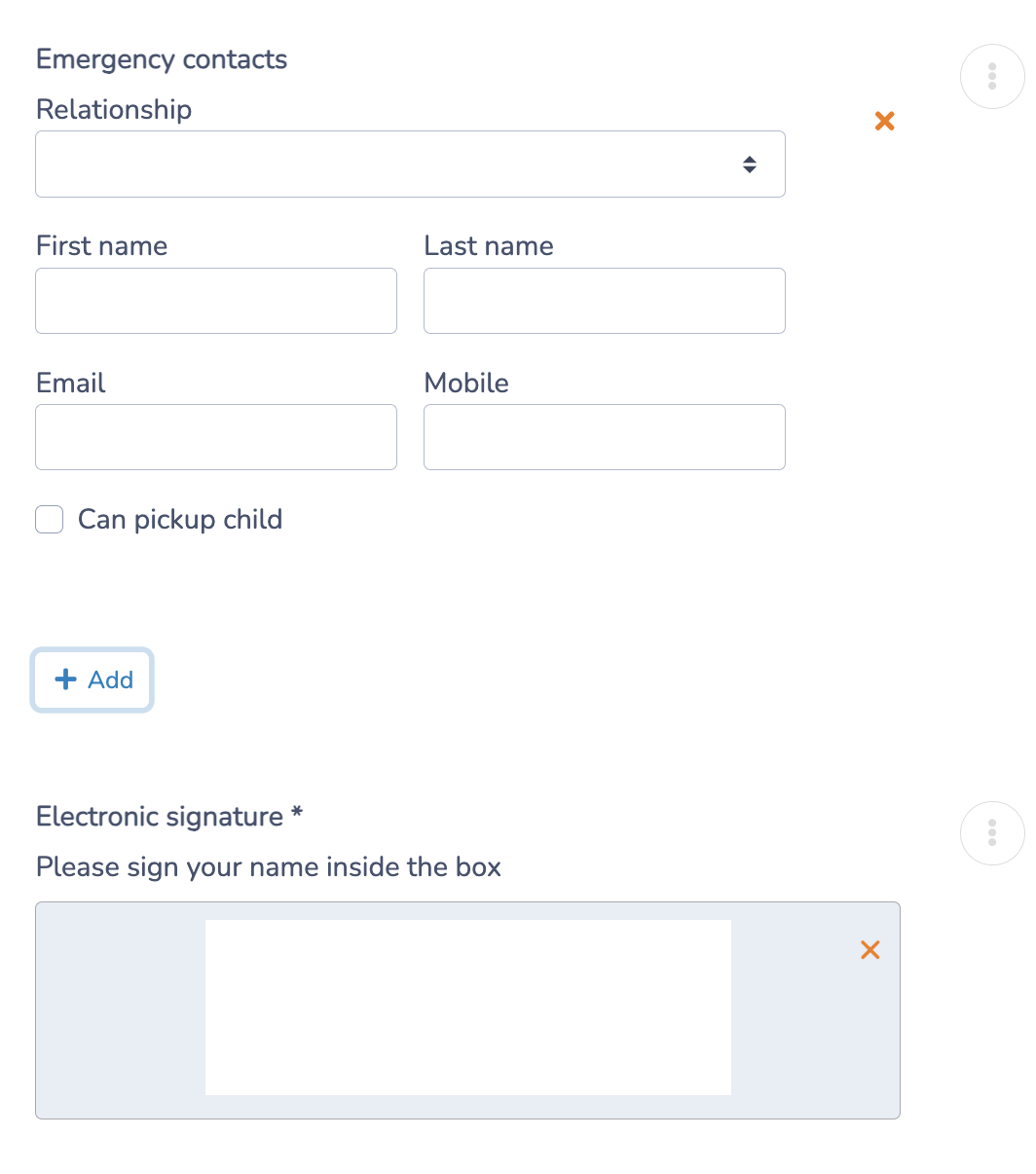
Every summer camp medical form should include fields for at least two emergency contacts. Activity Messenger lets parents add as many contacts as they need, so nothing falls through the cracks.
You’ll also want to include:
- A mandatory electronic signature confirming parental consent
- Consent checkboxes for emergency medical treatment
- Any required authorizations specific to your camp’s policies
These elements protect your camp legally and make sure parents have read and acknowledged the information they’ve submitted.
4. Use Conditional Branching
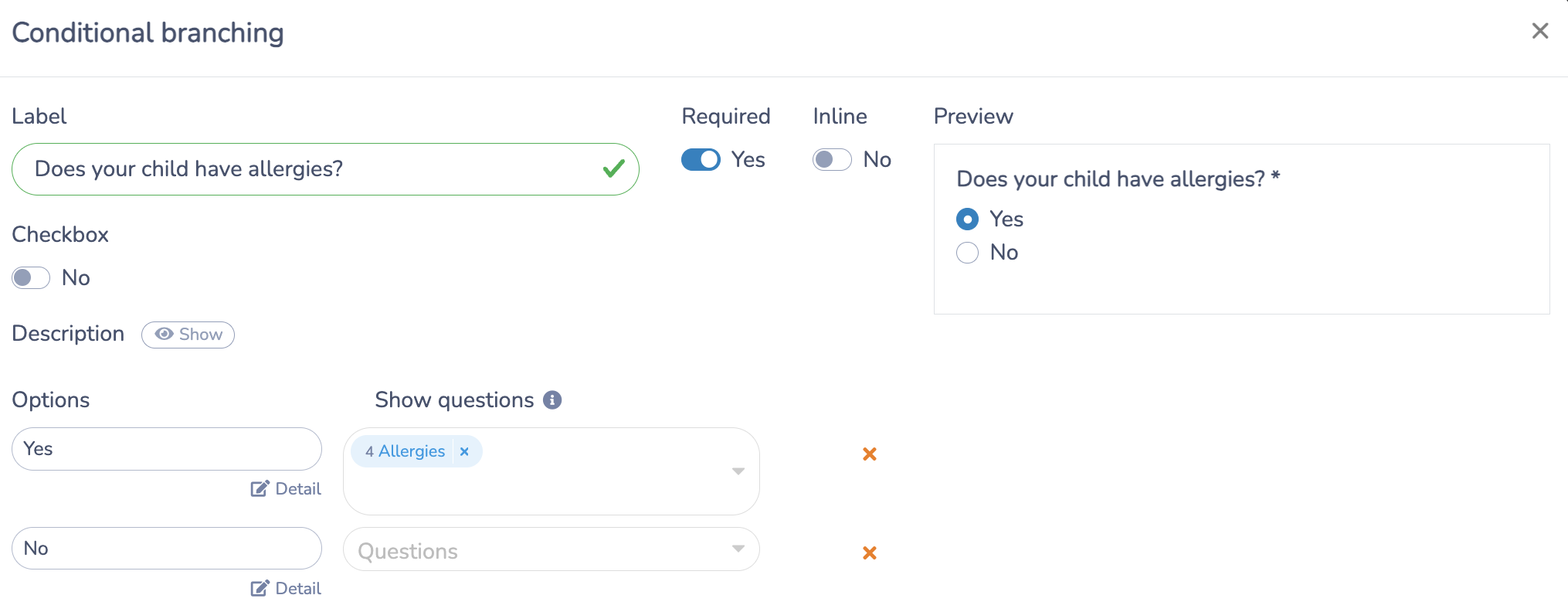
Conditional branching is one of the most useful features you can build into a summer camp medical form. It shows or hides questions based on a parent’s previous answers.
For example: if a parent indicates their child has a food allergy, the form can automatically follow up with questions about the allergy type, severity, and what action staff should take. Parents whose children have no allergies never see those questions.
This keeps the form concise for most families while still capturing everything you need in more complex situations.
5. Simplify Document Uploads
Some families will have medical documents worth collecting, such as action plans for severe allergies, specialist notes, or immunization records. Rather than managing these separately, include a document upload section directly in your form.
Keeping everything in one place means your team isn’t hunting through emails when they need something quickly.

6. Optimize the Parent Experience
The best summer camp medical forms are the ones parents actually finish. A few things make a real difference:
- Mobile-friendly design: All Activity Messenger forms are built mobile-first, so parents can fill them out on their phones without formatting issues.
- Clear instructions: Short, direct guidance at each section reduces errors and incomplete submissions.
- Save and return: Let parents save their progress so they can step away and return later.
The easier the experience, the fewer follow-ups you’ll need to send.
7. Implement Follow-up Strategies
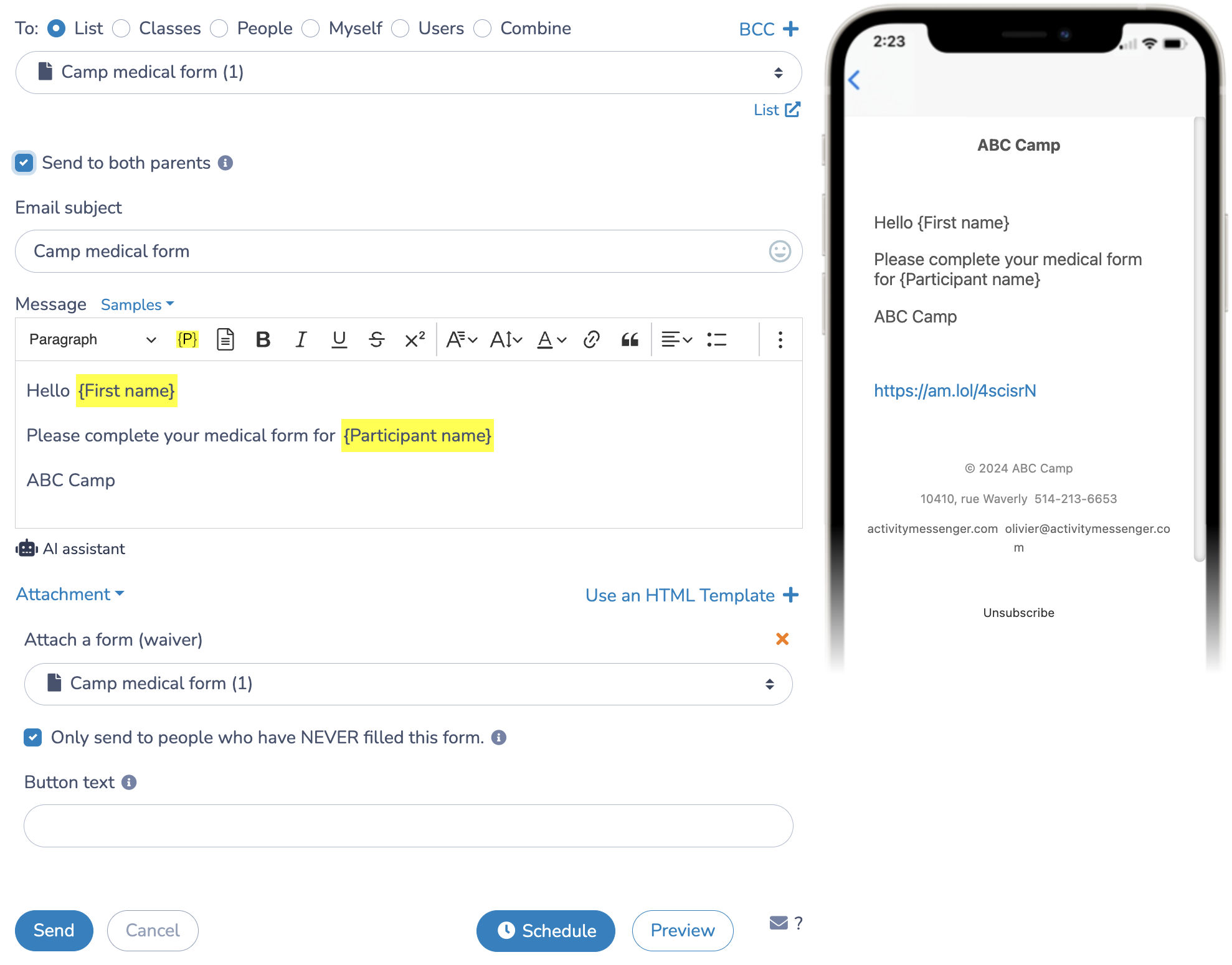
Even with a great form, some parents will need a reminder. Rather than tracking this manually, use automated follow-ups that target only the families who haven’t submitted yet.
With Activity Messenger, you can:
- Schedule email and SMS reminders at set intervals
- Limit reminders to parents who haven’t completed the form, so you’re not messaging everyone
- Set up a QR code at camp drop-off so late submissions can happen right at the door on the first day
This removes the manual chase entirely and keeps your completion rates high without adding work for your team.
8. Leverage Data for Camp Safety
Once forms are submitted, the real value is in how you use the data.
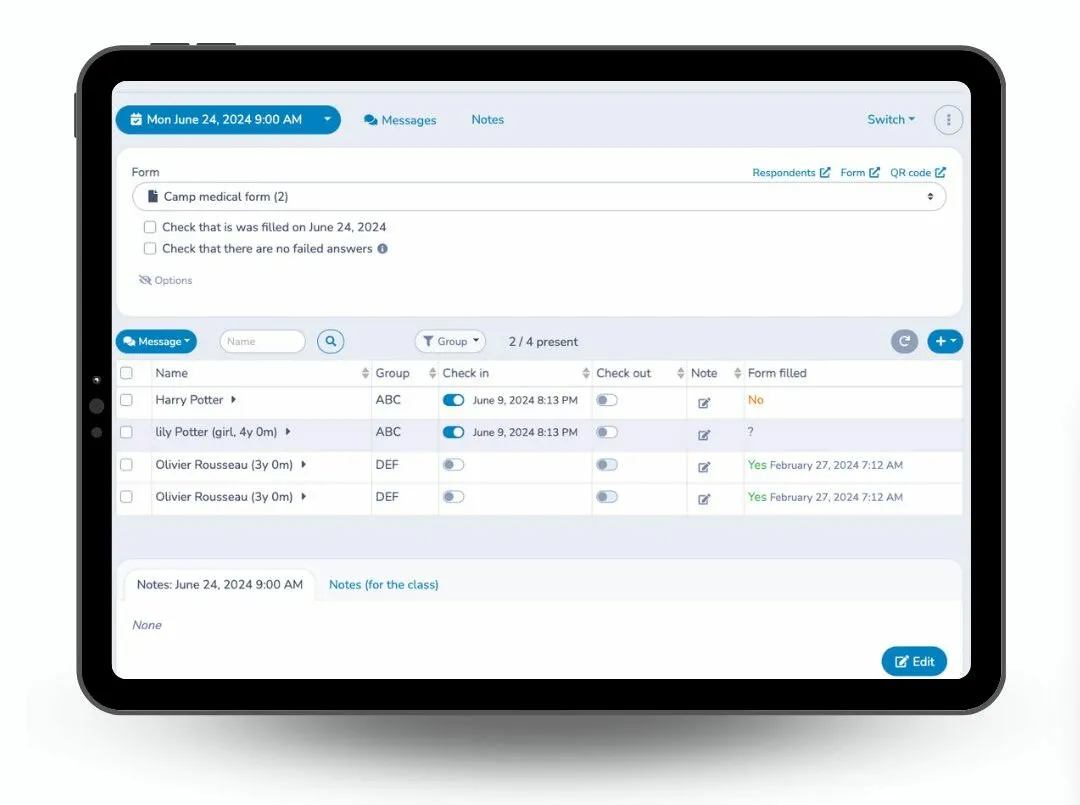
Activity Messenger’s filtering tools let you sort campers by allergy, condition, or any other criteria. This is useful for trip planning, meal prep, and staff briefings. You can also connect medical information directly to your camp attendance list, giving counsellors real-time access without having to dig through files.
When something happens, your team should be able to get the right information in seconds.
Frequently Asked Questions
What is a summer camp medical form?
A summer camp medical form collects health and emergency information about each camper before the session begins. It typically covers medical history, allergies, medications, immunizations, emergency contacts, and parental consent for emergency treatment.
Why should summer camp medical forms be online instead of paper?
Online forms are easier to complete, update, and store. They also make it much faster to search and filter information in an emergency. Paper forms can get lost, damaged, or left in the office when you actually need them in the field.
When should I send the camp medical form to families?
You should include the camp medical form as part of your registration process or send it immediately after. The earlier families receive it, the more time you have to follow up before camp starts.
Can I customize the form for my camp’s specific needs?
Yes, platforms like Activity Messenger let you add, remove, or reorder questions, create conditional branching, and include sections specific to your activities, policies, or licensing requirements.
How do I make sure all families complete the form before camp starts?
Automated reminders are the most effective approach. Set up a sequence that sends follow-up emails or SMS messages to parents who haven’t submitted, and schedule a final push a few days before the session begins.
Is it possible to collect medical forms on the first day of camp?
Yes, you can definitely collect medical forms on the first day. Putting a QR code at your camp entrance lets families who missed earlier communications submit their camp medical form right at drop-off. We suggest, however, getting as much as you can out of the way during registration to ensure a smooth start to your camp session.
How do camp staff access the information during the session?
With Activity Messenger, medical data can be linked to your attendance list, giving counsellors real-time access on any device during camp. If camp staff have tablets or smartphones on hand, they can access key information when they need it.
Ready to Simplify Your Camp's Medical Forms?
Activity Messenger brings together registration, medical forms, waivers, email and SMS communication, and attendance tracking in one platform, built specifically for camps.
📅 Book a free demo to see how Activity Messenger can help you:
- Build and customize your summer camp medical form without any technical knowledge
- Automate reminders to families who haven’t submitted yet
- Filter campers by medical need in seconds
- Give counsellors real-time access to health information during camp
- Replace tools like Jotform, SurveyMonkey, and Google Forms with one platform
🏕️ More tools for camps: