
A schedule change, a field trip reminder, a missing waiver. Camp communication is constant, and most of it can’t wait for someone to check their email. Mass texting for camps solves that problem by putting updates directly on a parent’s phone, where they’ll actually see them, whether you’re running a day camp in Ontario or a summer program in Ohio.
This guide covers why SMS outperforms email for camp communication, what to send by text, how to set up bulk messaging for your camp roster, and what to look for in a camp SMS notification software before you commit to one, including the compliance rules that apply on both sides of the border.
Key Takeaways:
- Text messages get opened within minutes, which makes SMS the right channel for anything time-sensitive: schedule changes, weather cancellations, pickup reminders.
- A camp messaging system built for registration data can segment texts by week, group, or add-on automatically, so you’re never manually sorting a contact list before sending.
- Reaching both parents on a shared registration, not just whoever signed up, keeps custody arrangements and co-parenting situations from becoming a communication gap.
- Two-way texting lets parents reply directly, confirm attendance, or ask a quick question without a phone call to the office.
- Scheduled and automated texts (pre-camp reminders, waiver follow-ups, post-week surveys) run without anyone on staff sending them by hand.
Table of Contents
- Why SMS Works Better Than Email for Camp Communication
- SMS vs. Email for Camps
- What to Send by Text During Camp Season
- How to Send Bulk SMS to Camp Parents
- Personalizing and Segmenting Your Messages
- Automating and Scheduling Camp Texts
- What to Look for in a Camp SMS Notification Software
- More Ways Activity Messenger Helps Camps
- Frequently Asked Questions about Mass Texting for Camps
- Final Thoughts: Mass Texting for Camps Made Easy
Why SMS Works Better Than Email for Camp Communication
Email still has a place for longer updates, but it competes with dozens of other messages sitting in a parent’s inbox. A camp announcement can sit unread for a day, which is a problem when the message is “no camp tomorrow due to weather” or “pickup is moving to the side entrance this afternoon.”
Text messages are read within minutes of arriving, which is why mass texting for camps has become the default channel for anything urgent: closures, schedule changes, and last-minute notices that need a response before the day starts.
That doesn’t mean email disappears. A welcome package with full camp details, a multi-page packing list, or a newsletter recap still reads better as email. The two channels work best together: SMS for what needs to be seen right now, email for what needs to be kept. Texts can also play a key role in your summer camp marketing strategies.
🏕️ If you’re a camp manager looking to potentially switch your camp management solution, here is a list of the 5 best camp management software on the market.
What to Send by Text During Camp Season
A few common camp situations are particularly well suited to SMS:
- 🚨 Weather alerts and cancellations: Let families know if camp is closed, delayed, or moving indoors because of severe weather.
- 🚌 Field trip updates: Remind parents about departure times, special drop-off instructions, or a change to the day’s plans.
- ⏰ Drop-off and pickup reminders: Send a quick reminder about pickup times, parking instructions, or a temporary entrance change.
- 📝 Form and waiver follow-ups: Remind families who still need to complete a waiver, medical form, or other required paperwork.
- 💳 Payment reminders: Let a family know when a balance is due before their camper’s next week begins.
- 🎒 Pre-camp reminders: Send a short reminder about what to bring, when to arrive, or where to go on the first day.
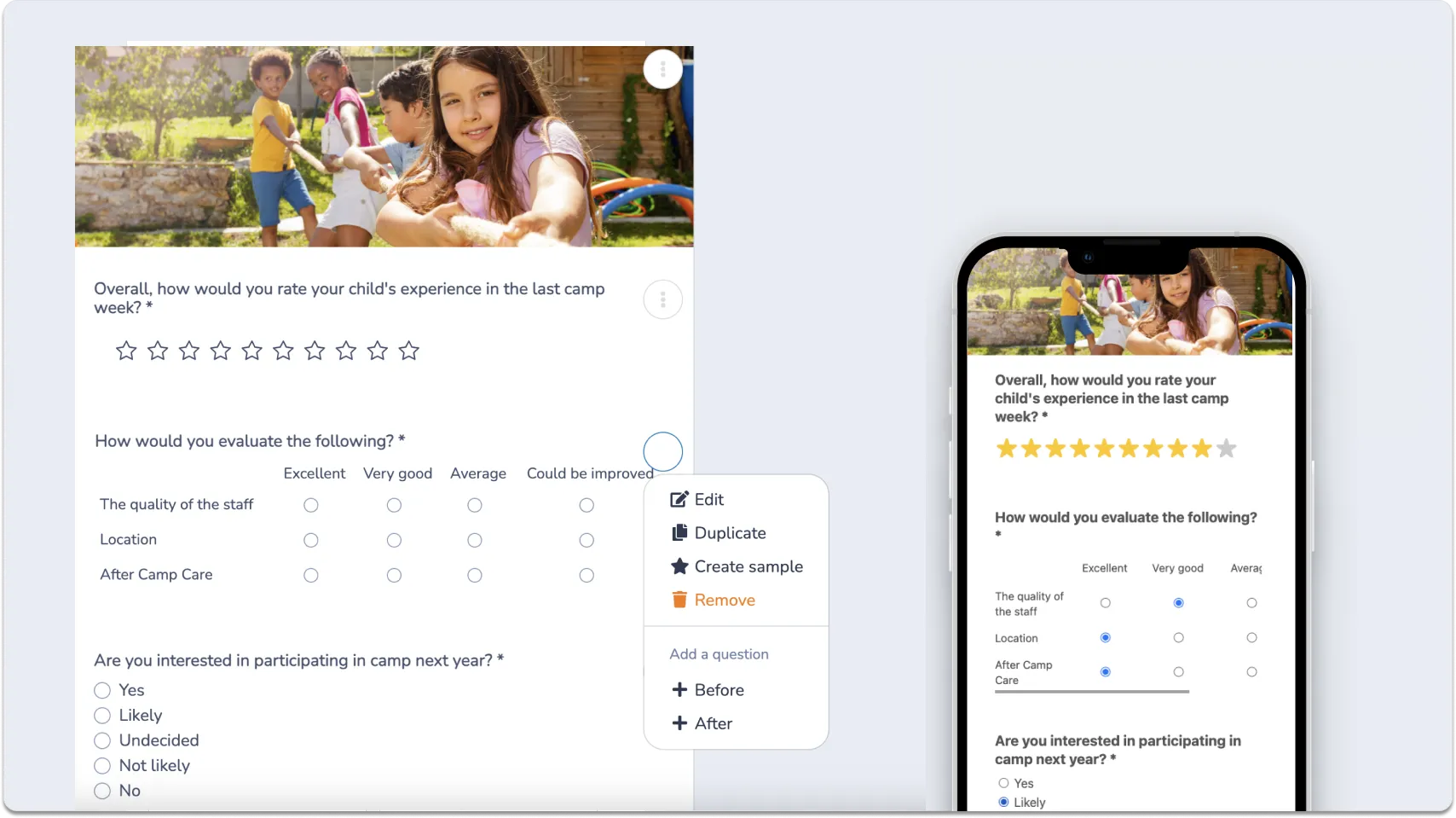
- 📊 End-of-week surveys: Ask families for feedback while the camp experience is still fresh.
- 🎉 Registration and program announcements: Let families know when registration opens, a new week is added, or a spot becomes available.
The key is relevance: a field trip reminder should only reach the families going on that trip, while a weather closure may need to reach everyone at camp that day.
SMS vs. Email for Camps
SMS and email work best together. The right channel depends on how quickly the message needs to be seen and how much information you need to share.
Use SMS for
Use email for
Weather cancellations
Welcome packages
Pickup or drop-off changes
Packing lists
Last-minute schedule changes
Detailed camp information
Quick reminders
Newsletters and updates
Payment or form reminders
Longer instructions
Time-sensitive announcements
Information families may need to reference later
💡 A simple rule: use SMS when the message needs attention now, and email when families need more detail or may want to refer back later.
For example, a weather cancellation might start with a text telling parents that camp is closed tomorrow, followed by an email with more information about rescheduling or refunds.
How to Send Bulk SMS to Camp Parents
Sending a text to your full camp roster, or a specific segment of it, generally comes down to a few steps:
- Go to your Communications section and select SMS as the message type.
- Choose your audience: a specific week, a group, an add-on list (like lunch or extended care), or your entire roster. Filters can be combined, for example everyone in Week 3 who’s also signed up for the field trip add-on.
- Write your message and insert merge tags for the camper’s name, week, or balance due, so it reads like it was written for that family.
- Preview the message and confirm your recipient count before sending.
- Send instantly, or schedule it for a specific date and time, useful for a reminder you want to go out 48 hours before a session starts.
This is where being connected to registration data saves the most time. Activity Messenger already knows who’s in which week and group, so building a segment takes a few clicks instead of exporting a spreadsheet and cross-referencing it by hand.
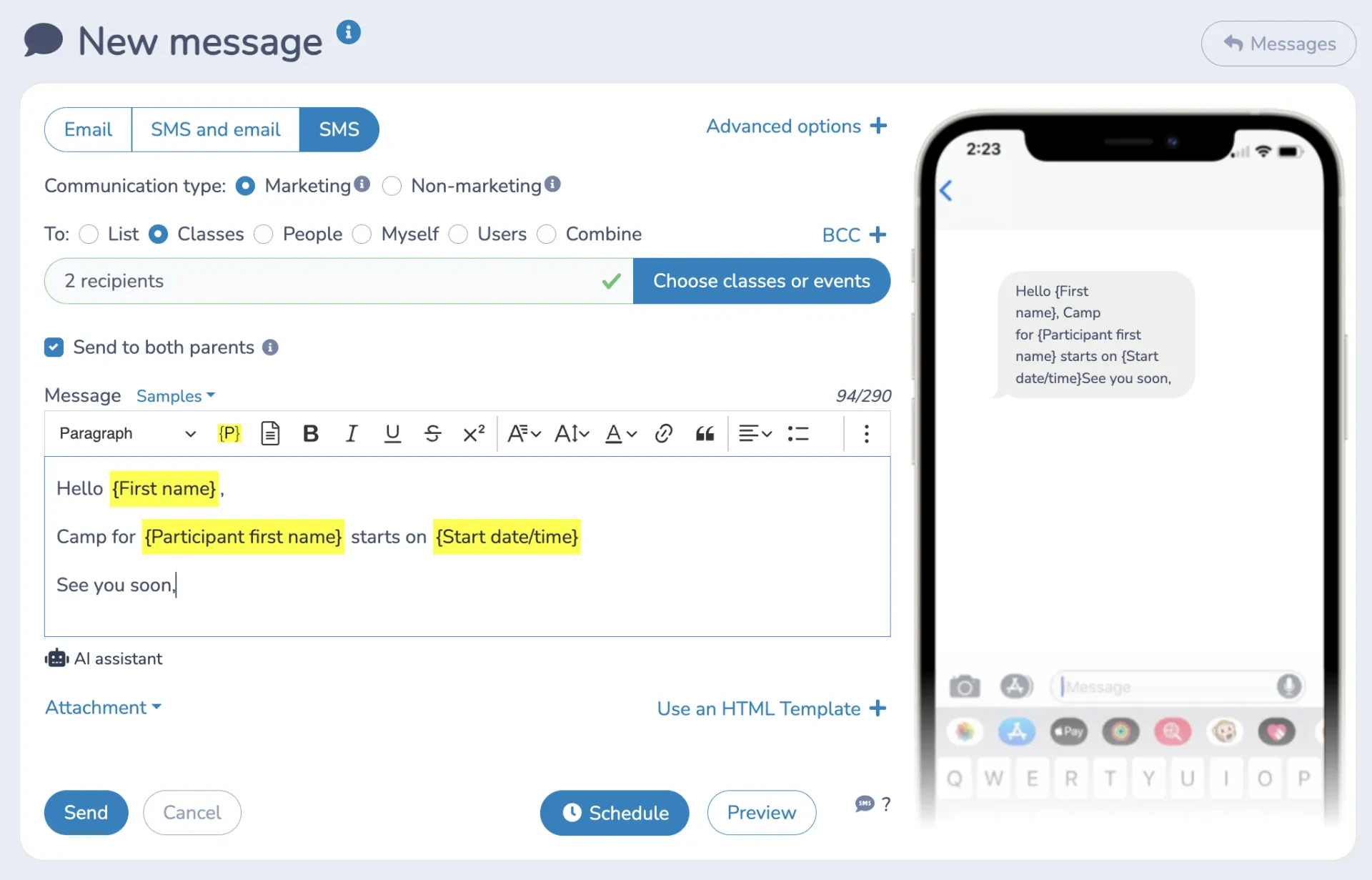
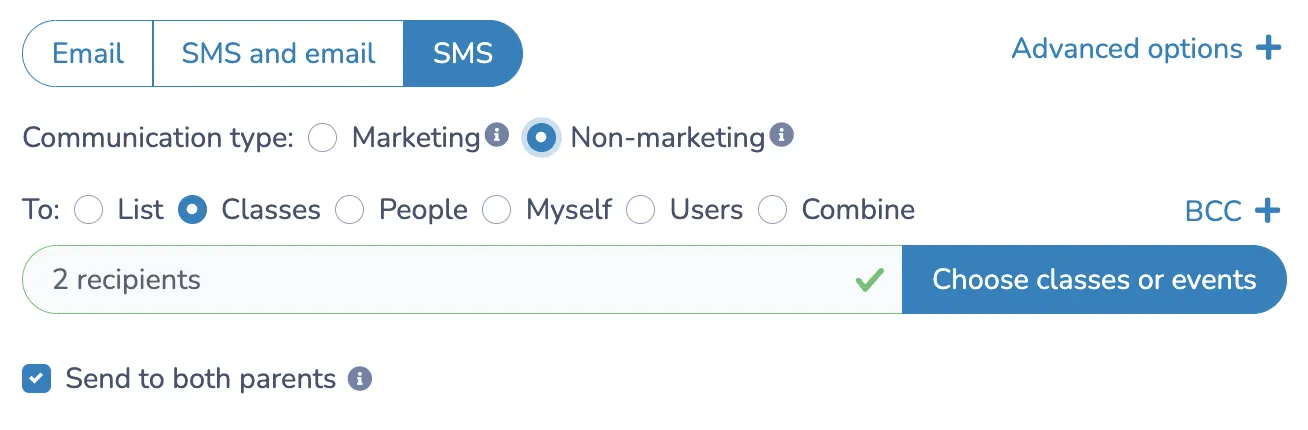
Many camp registrations only capture one parent’s contact information, which means the second parent or guardian relies on someone else to forward every update. This makes it easy for a pickup change or a payment reminder to get missed.
Look for a platform that lets you attach both parents or guardians to a single camper and send to both automatically, rather than requiring a second registration or a manual contact add. It matters most for co-parenting or shared custody situations, where both households need the same information at the same time, not a paraphrased version from a text thread.
Personalizing and Segmenting Your Messages
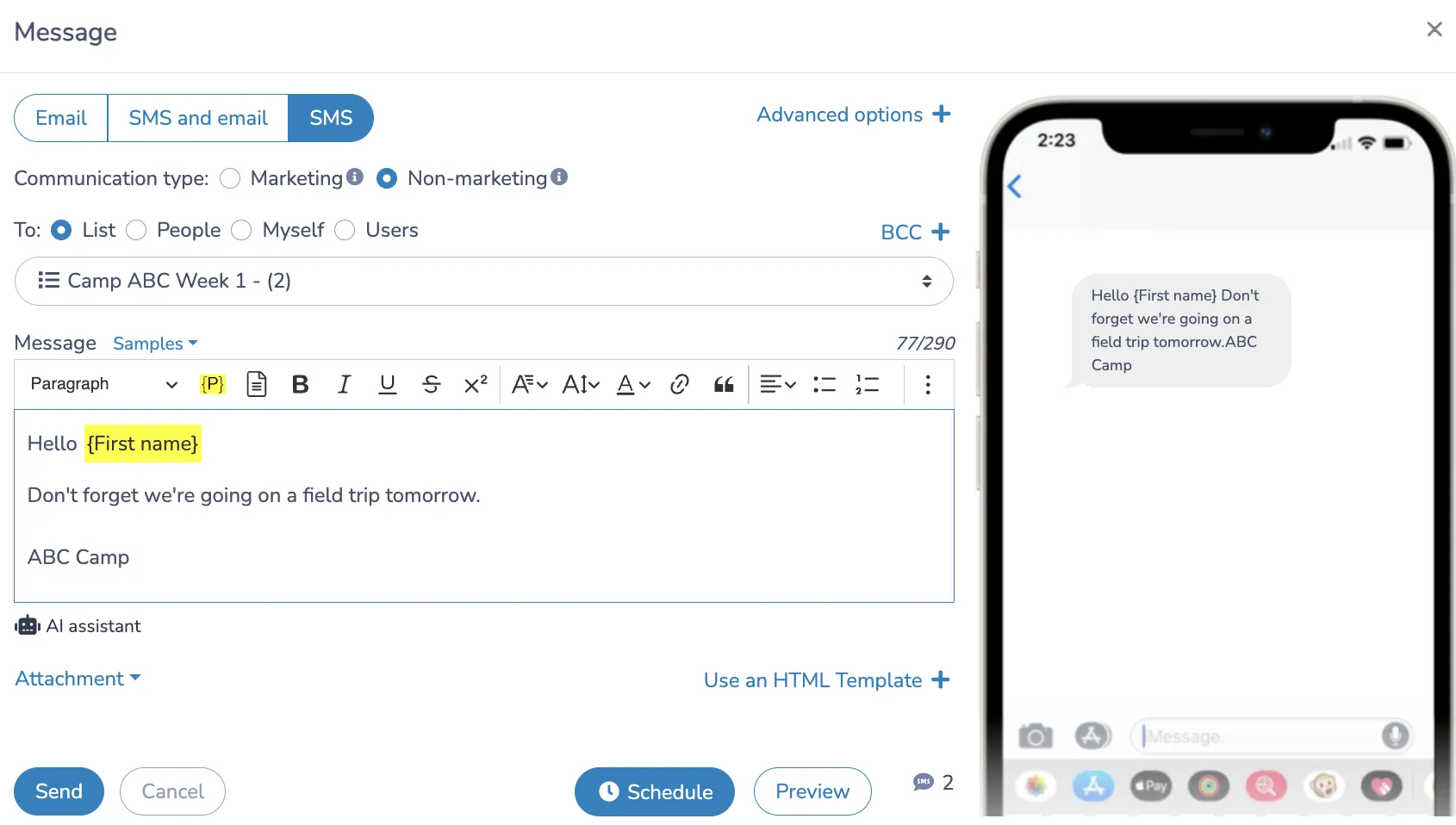
A generic blast to your entire list works for a general announcement, but most camp messages are more useful when they’re targeted:
- Merge tags insert the camper’s name, week, or balance due automatically, so a payment reminder doesn’t read like it was sent to everyone
- Segmentation by week or group means a field trip reminder only reaches the families it applies to
- Custom tags let you build lists around details specific to your camp, such as age group, skill level, specialty program, or other custom criteria
The goal is a message that reads like it was written for that family, because in a segmented system, it effectively was.
Automating and Scheduling Camp Texts
Camps run on a predictable calendar, which makes many communications good candidates for automation rather than manual sending every week:
- A pre-camp reminder sent 48 to 72 hours before a camper’s first day
- A waiver or medical form follow-up sent only to families who haven’t completed it yet
- A weekly reminder for returning campers as one week ends and the next begins
- A post-week survey sent automatically once the session wraps
Once these are set up, a family hears from you at the right moment without anyone on your team keeping track of send dates manually.
What to Look for in a Camp SMS Notification Software
Not every bulk texting platform works equally well for camp communication. Beyond simply sending messages to a list, look for features that make it easier to reach the right families at the right time. A few things separate a proper camp SMS notification software from a generic bulk texting service:
- Two-way texting, so parents can reply to confirm attendance or ask a question instead of calling the office
- Segmentation tied to registration data, not a contact list you have to maintain separately
- CASL and PIPEDA compliance for Canadian organizations, or TCPA compliance for US organizations, with built-in consent and opt-out handling
- Delivery and engagement reporting, so you can see who received, opened, or clicked your messages.
- One platform for SMS, email, forms, and waivers, so your camp messaging system isn’t a separate tool from everything else you’re already using
A texting tool that’s disconnected from registration means someone still has to keep two systems in sync.
More Ways Activity Messenger Helps Camps
Bulk SMS is one of the things camps use Activity Messenger for. Our platform also handles:
Registration Forms Built for Multi-Week Camps
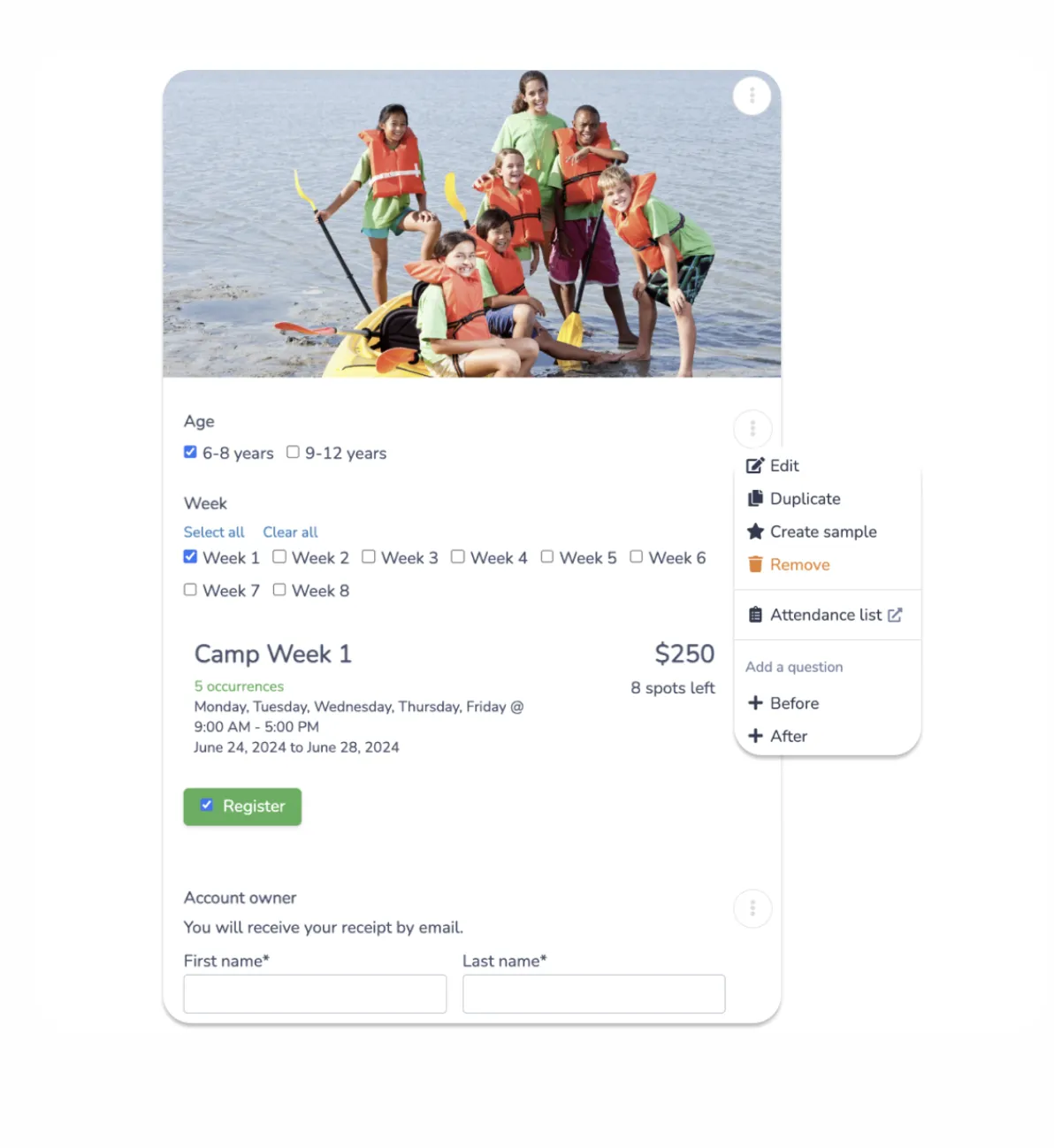
Bulk SMS is only useful once you have accurate contact and week data behind it. Activity Messenger’s online registration forms handle multi-week sign-ups, sibling discounts, and waitlists in a single submission, so the segments you’re texting are built from real registration data instead of a manually maintained list.
Digital Waivers Tied to Every Camper’s Record
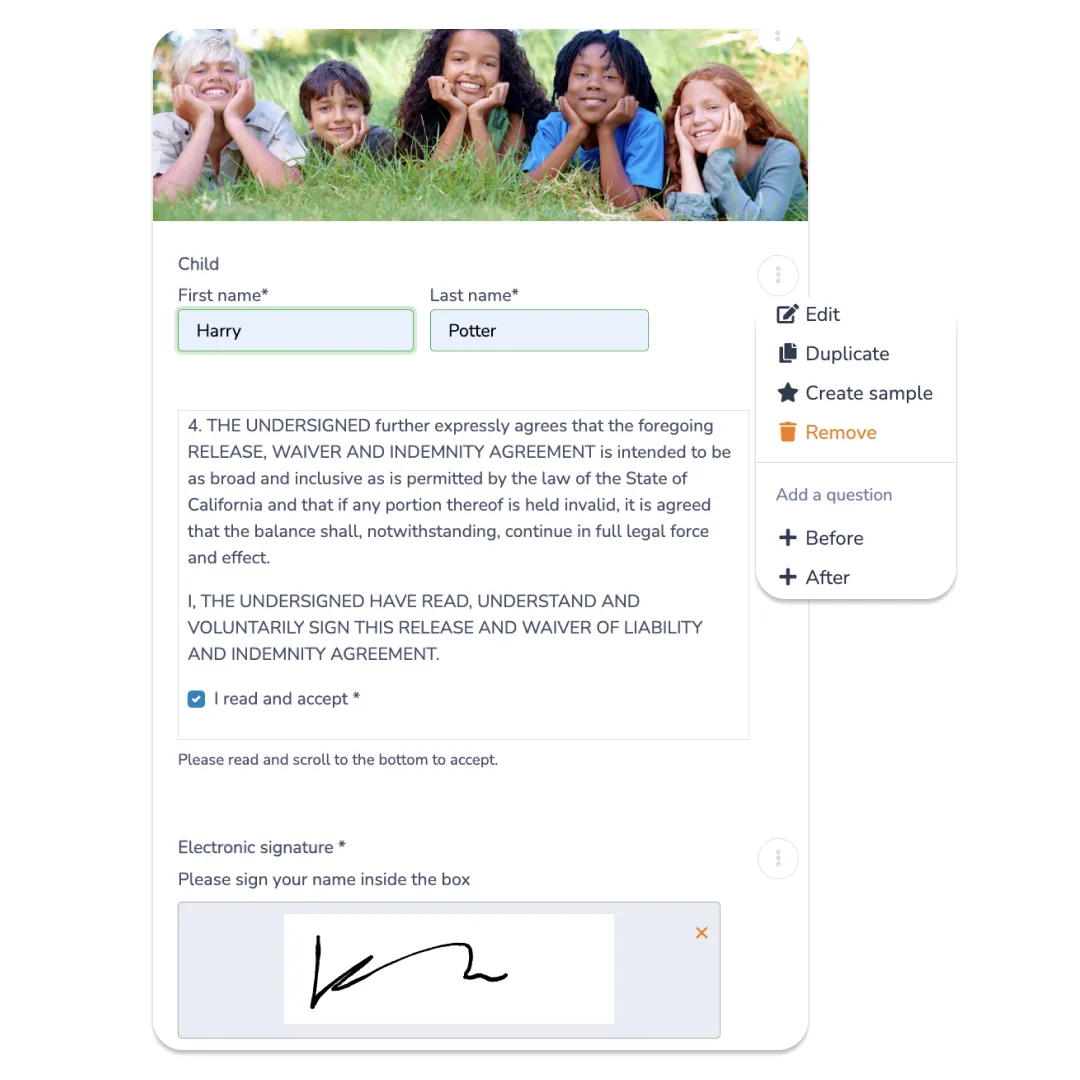
A signed waiver lives directly on the camper’s profile, not in a separate compliance tracker. That’s what makes a waiver follow-up text possible in the first place: the system already knows exactly who hasn’t signed, so the reminder goes only to the families who still need to.
Attendance That Flags Missing Forms and Payments
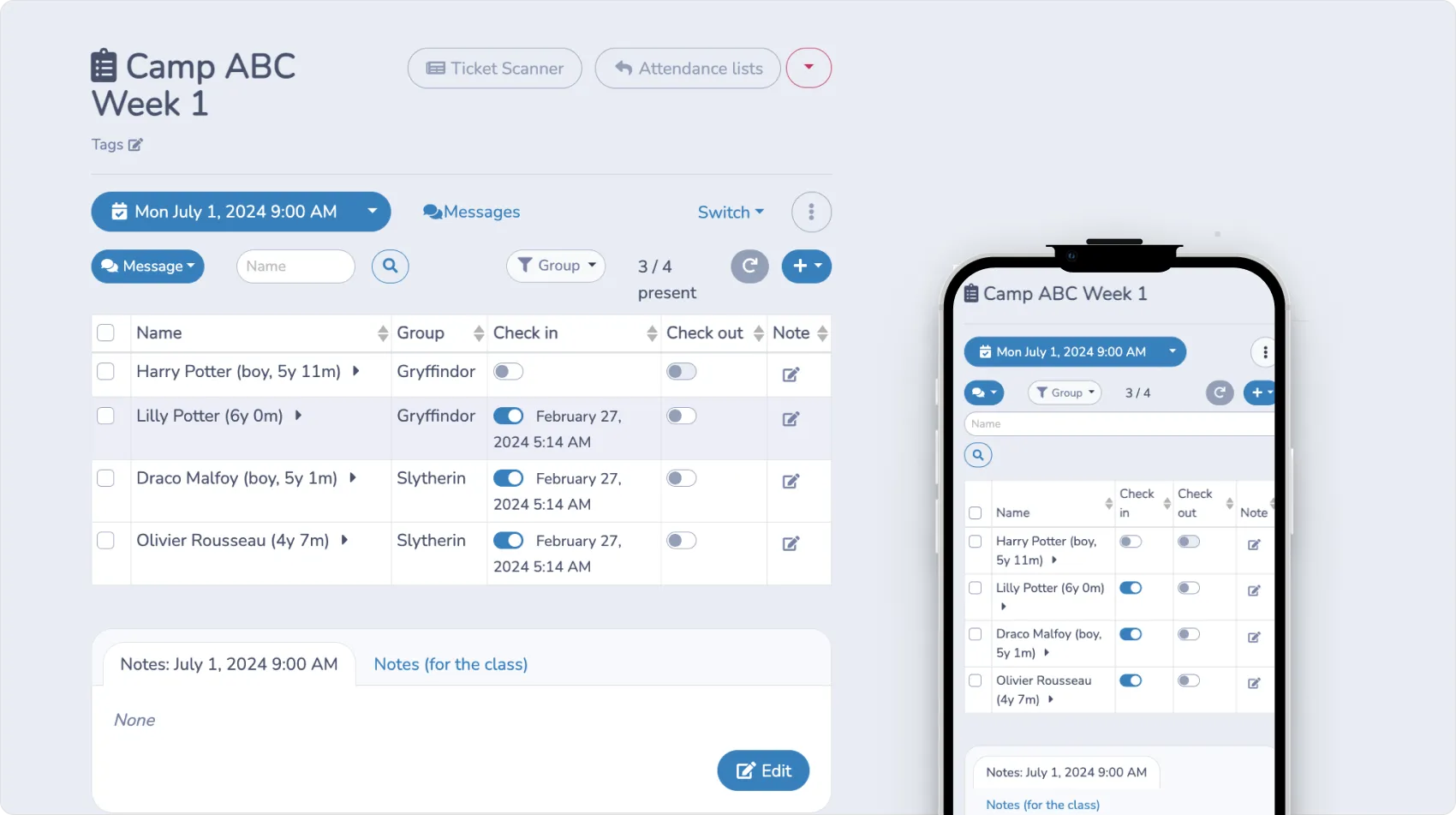
Your attendance list doubles as a compliance check. Staff can see who’s checked in, who’s missing a waiver, and who has a balance due, all from the same screen they’re already using at drop-off, without cross-referencing a second spreadsheet.
Email Marketing to Complement Your SMS Strategy
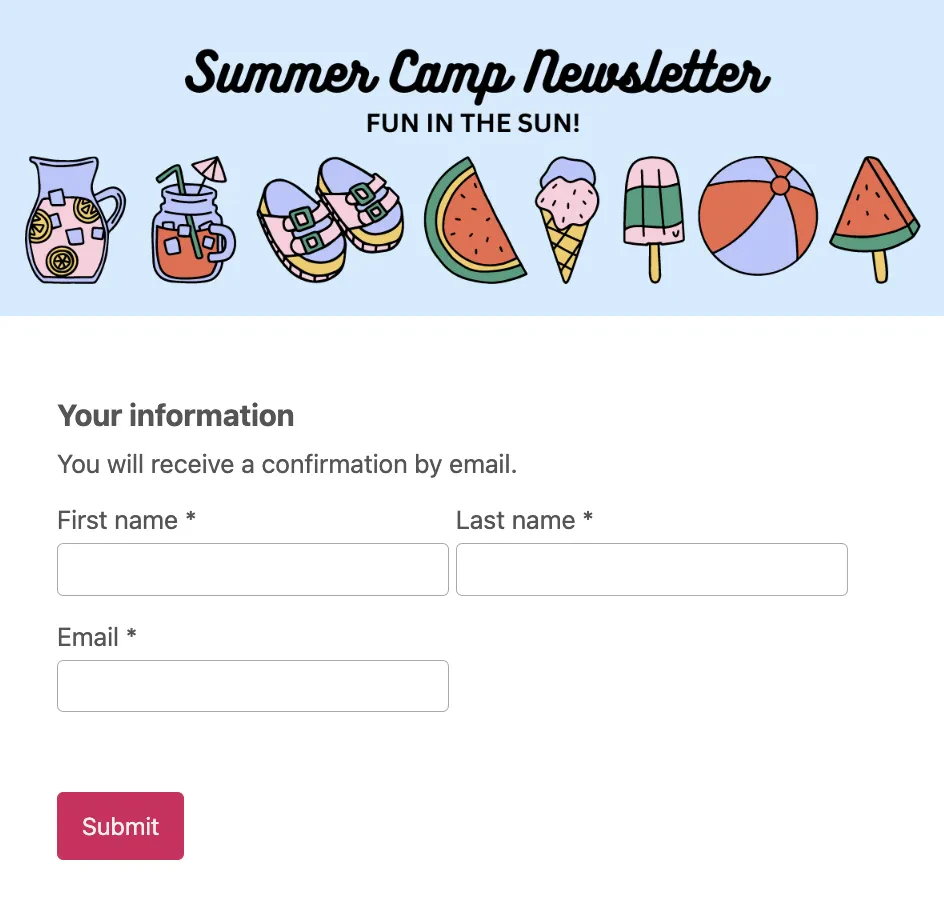
Not every message needs to be a text. Longer updates, welcome packages, and newsletter-style recaps still read better as email marketing blasts. Activity Messenger runs both channels from the same platform, so a family’s contact preferences and segments stay consistent whether you’re texting or emailing them.
👉 Replacing a standalone texting tool with one that’s already connected to registration, waivers, and attendance means one less login and one less place for information to fall out of sync.
Frequently Asked Questions about Mass Texting for Camps
What is bulk SMS for camps?
Bulk SMS allows camps to send the same text message to a large group of parents or guardians at once. Camps can use it for weather alerts, schedule changes, pickup reminders, payment notices, registration announcements, and other time-sensitive updates.
What’s the difference between a camp SMS notification software and a general mass texting tool?
A general texting tool sends messages to whatever contact list you upload. A camp SMS notification software is connected to registration, so it already knows which parents belong to which week or group, and it can automate sends like pre-camp reminders or waiver follow-ups without a manual list each time.
What should camps send by text?
SMS works best for short, time-sensitive messages that parents need to see quickly. Common examples include weather cancellations, field trip reminders, pickup changes, pre-camp reminders, incomplete waiver notices, and payment reminders. Longer information, such as welcome packages or detailed packing lists, is usually better suited to email.
Can camps send texts to specific groups of parents?
Yes, a bulk SMS platform with segmentation like Activity Messenger can let camps send messages to specific weeks, groups, activities, or other categories instead of texting the entire roster. This helps ensure families only receive messages that apply to them.
Can camps send a text to both parents or guardians?
Some camp registration and communication platforms allow multiple parents or guardians to be connected to the same camper and included in SMS communication. This can be especially useful when two households need to receive the same pickup, schedule, or payment information.
Can camp text messages be scheduled?
Many SMS platforms allow messages to be scheduled for a specific date and time. This can be useful for pre-camp reminders, weekly updates, payment reminders, or messages that need to go out before a scheduled activity.
Can parents reply to camp text messages?
Some camp SMS platforms support two-way texting, allowing parents to reply to messages rather than calling the camp office. This can be useful for quick questions, confirmations, or follow-ups.
How long should a camp text message be?
Keep camp texts as short as possible while still including the information families need. If a message requires a longer explanation, consider sending the key information by SMS and linking to the full details. Longer SMS messages may be split into multiple segments, which can increase the cost of sending them.
Is bulk SMS compliant for camps in Canada and the US?
SMS requirements depend on the type of message you’re sending and where your camp operates. Canadian organizations should understand their obligations under CASL and PIPEDA, while US organizations need to consider requirements under the TCPA. Camps should use a platform that supports consent and opt-out management and follow the rules that apply to their specific communications.
Final Thoughts: Mass Texting for Camps Made Easy
Mass texting for camps works best alongside your other channels, not as a replacement. A schedule change, a weather cancellation, or a missing waiver is worth a text, whereas a full welcome packet still belongs in an email.
The camps that get the most out of SMS are the ones sending it from the same place they manage registration, not a separate tool on the side. If you’re still texting parents from a personal phone or a disconnected tool, it’s worth a closer look at what a connected system saves your front desk every week.