
Remember when registering your child for an activity meant a phone call or a trip in person? You spoke to a friendly voice, answered a few questions, and someone walked you through every step. It felt personal and direct, even if it was slow.
Over the past 15+ years, as registration moved online, we traded that personal touch for efficiency. Human interaction gave way to scrolling through endless class lists. The convenience of being able to register anytime is real, but it came at a cost.
In this article, we’ll look at how modern class management software is taking a different approach, and why the old model of registration software is starting to show its age.
🎥 Prefer to watch? Olivier breaks down the same story in under a minute:
My Story
A decade ago, my partner and I started our kids’ sports business. We spent countless hours on the phone, walking people through enrolment and answering the same questions over and over.
Fast forward to today, and many organizations are still dealing with the same problem. Too often, staff end up emailing or calling customers just to help them finish signing up.
It doesn’t have to be this way. 👉 Activity Messenger is class management software built for swim schools, summer camps, gymnastics clubs, and dance studios.
A Quick Comparison
Think of JackRabbit and iClassPro as the Yahoo of this market. Real pioneers, but their interfaces are still packed with long, unfiltered lists of programs, camps, and schedules that turn navigation into a maze.
Modern class management platforms borrow from what made Google simple: speed, clarity, and a customer-first path to the answer.
Activity Messenger takes the same approach to class registration and extends it the way Google expanded into Gmail, Maps, and News: with tools that also replace Mailchimp, SurveyMonkey, Eventbrite, and Smartwaiver.
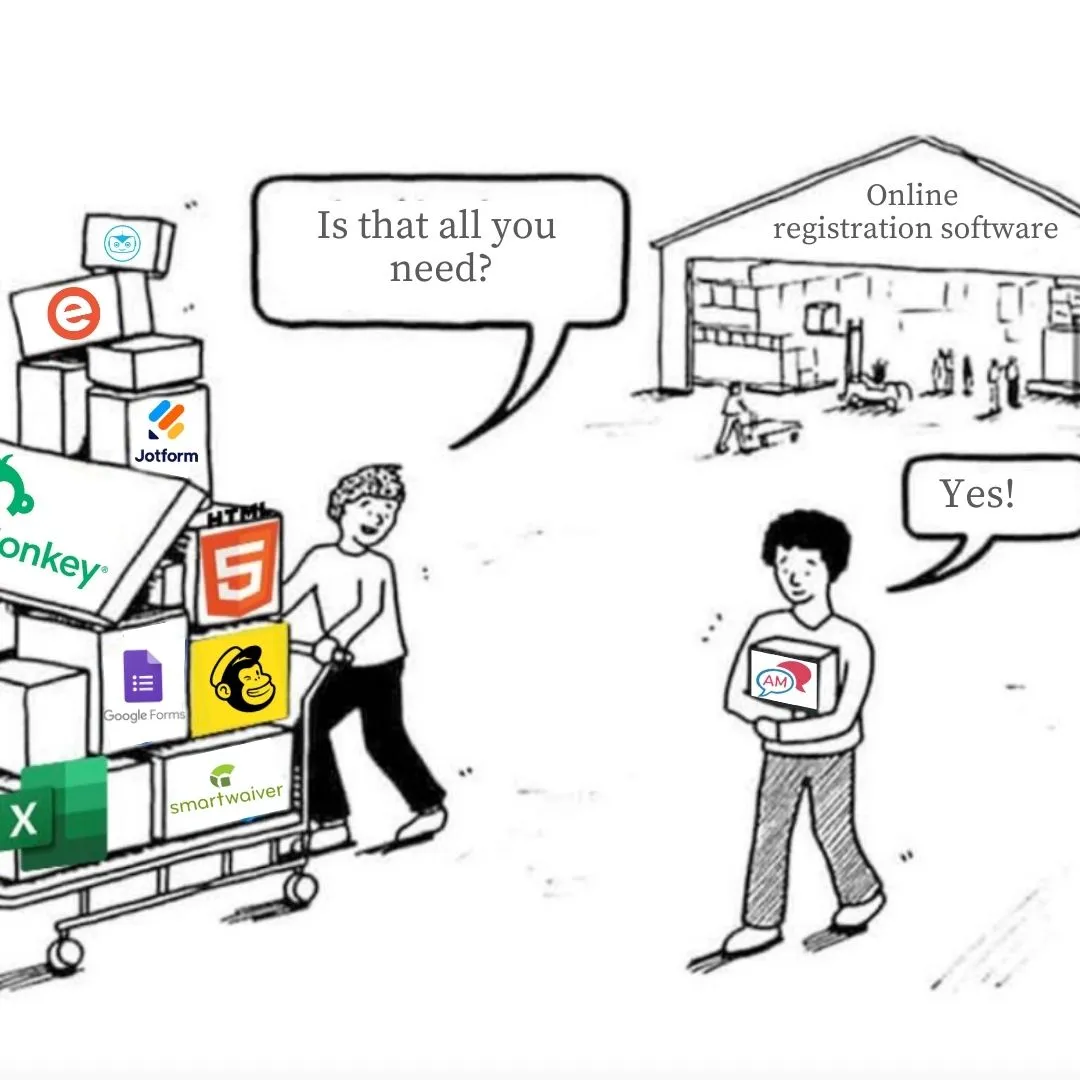
Crafting a Registration Path That Feels Like a Phone Call
Think about a call where you helped a client find a class. You probably asked:
- What program are you interested in?
- How old is your child?
- What day works for enrolment?
- What level are they in?
- Which location?
Those questions get a family to the right class fast. But most registration software still hands new customers an unfiltered list and expects them to figure it out on their own smartphone screen.
Some do. Others email for help. Some just leave, and that’s a lost client.
Building an intuitive registration path means translating those guiding questions into a workflow that replicates the personal touch of that phone call, rather than a static list.
The Paradox of Fewer Clicks
There’s a common belief that fewer clicks to purchase always improve the customer journey.
It’s a rule that works well for a purchase with few variables, like Amazon’s one-click checkout. It works less well for registering a child in an activity, where the right answer depends on age, level, schedule, and location.
Cutting clicks to purchase for something this personal usually just means dumping more decisions on the customer at once. The better goal is to optimize the time between clicks, not minimize the number of clicks.
Instagram Reels, Dopamine, and Online Registrations
TikTok, Reels, and Shorts owe their pull to how directly they tap into the brain’s reward system. Short, personalized, interactive content keeps people coming back and is reshaping what they expect from any screen, including course registration software.
That shift shows up as less patience for scrolling through static, option-heavy pages. Guiding customers through a few short, personalized steps fits how people already expect to interact online. If your registration path feels more like a ’90s website than a quick scroll through Reels, that’s worth a second look.
JackRabbit and iClassPro Were Pioneers. We're Picking Up the Baton.
Both are genuinely good companies with groundbreaking products, and modern class management software wouldn’t exist without them. But older platforms tend to offer generic, rigid tools built to work the same way for every business.
Your business isn’t generic, so your registration software shouldn’t force it to be.
If you’re weighing your options, we’ve broken down JackRabbit alternatives and iClassPro alternatives in depth.
But if you’re looking for a modern approach to class management that improves the customer experience, increases registrations, and reduces support requests, book a demo with Activity Messenger today.
📖 Related Reading: