If you’re wondering how to increase your member retention, you aren’t alone. Getting new members through the door is only half the battle.
Member retention is one of the key indicators of a healthy gym, club, or program. Yet, for many organizations, it’s often seen as an afterthought, something only to address when renewals start to decline.
The good news? Retention isn’t random. It’s built through intentional systems, communication, and experiences across the entire member journey.
In this guide, we’ll walk through 10 proven membership retention strategies that gyms, sports clubs, swim schools, dance studios, and community programs can start applying right away.
Improving your retention rate by just 5% can have a huge impact on long-term revenue. Here’s what strong retention actually does for your organization:
Retention starts before a member ever walks through your door.
If your registration process is confusing, slow, or incomplete, you’re starting the relationship on the wrong foot. A clunky sign-up experience signals to a new member that administration will always be a hassle.
A strong registration experience should:
The goal is a single, smooth flow from interest to confirmed registration. This matters for retention because members who experience a smooth start are more likely to feel confident about their decision to join. Friction at the beginning plants seeds of doubt that directly affect member retention down the line.

📌 Activity Messenger Tip: Activity Messenger combines registration forms, digital waivers, and payment processing into a single flow. Members complete everything in one place, and your team receives complete, organized records from day one. Learn how to build a registration form with payment →
New members who don’t receive a clear welcome, don’t understand what’s available to them, or feel unsure about what to do next, are at high risk of drifting away before they’ve built a habit.
A structured onboarding journey should cover the first 30 days and include, at a minimum:
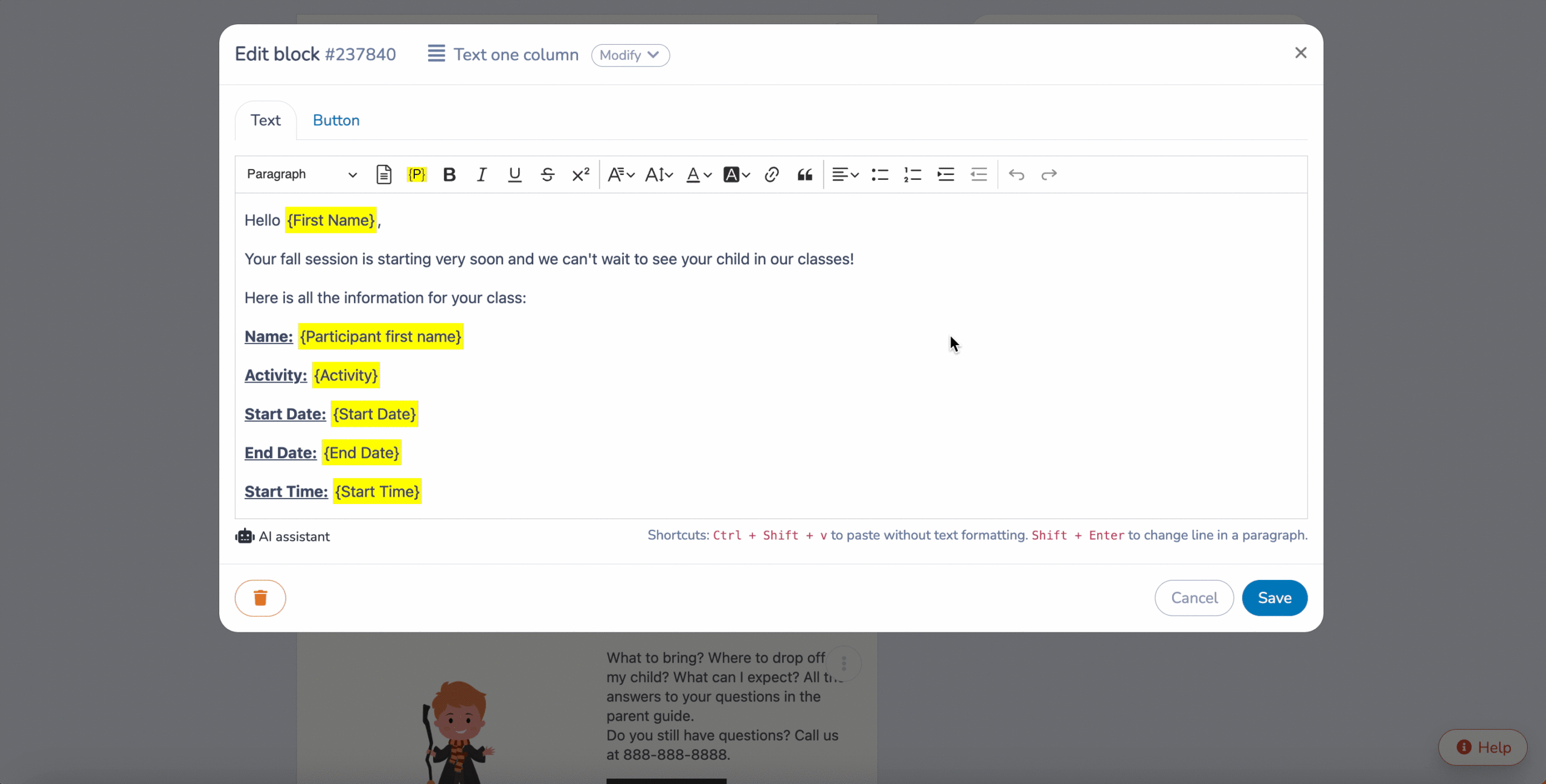
Automating your onboarding sequence ensures that every new member receives a consistent, high-quality introduction to your organization, without adding work to your team.
📌 Activity Messenger Tip: Activity Messenger’s automated task workflows trigger the moment someone registers by sending a welcome message, a pre-session reminder, and a first-week follow-up without any manual effort from your team. Every new member gets the same consistent experience, every time.
Onboarding sets the stage, but early engagement is what actually builds the habit.
Members who attend their first session, connect with staff or other participants, and leave feeling they made the right decision are far more likely to keep coming back.
Members who sign up, delay their first visit, and never quite build momentum are the ones most likely to cancel quietly a month or two later.
Your goal in the first seven days is simple: get the new member to show up, and make sure that first experience is positive.
Practical ways to drive early engagement:
When members hear from your organization regularly, they feel connected to it. When they don’t hear from you for weeks, your gym or club becomes easy to deprioritize. By the time renewal notices arrive, the membership feels like something they’ve already mentally moved on from.
The challenge for most organizations is that consistent communication feels time-consuming. If you have the right systems in place, it doesn’t have to be.
With automation, you can deliver:
The most effective communication is also segmented. A new member needs different messaging than someone who has been with you for three years. A parent enrolling a child has different questions than an adult enrolling themselves.
Sending everyone the same generic update is better than nothing, but targeted communication based on member type, program, or engagement level can go the extra mile.
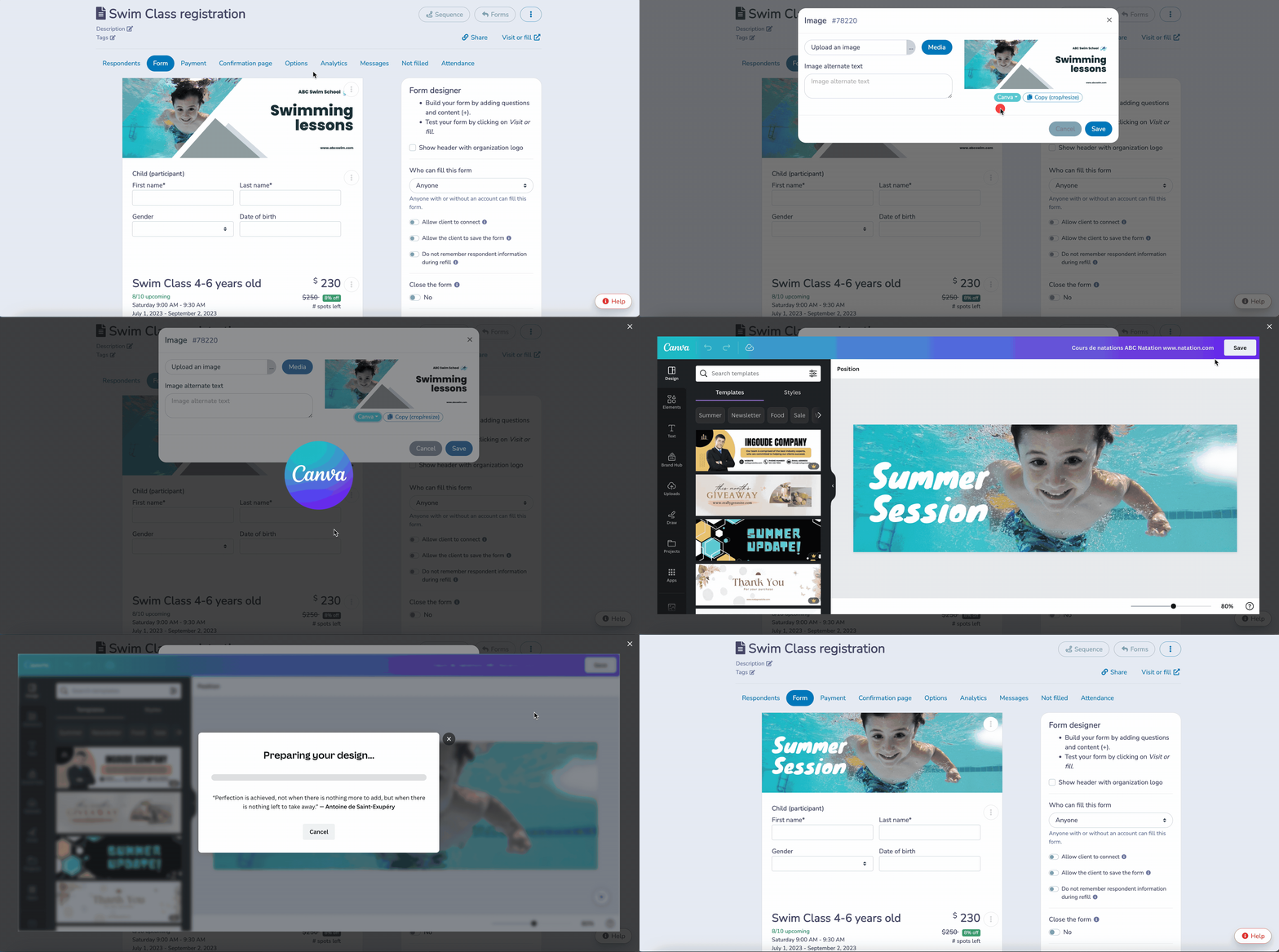
📌 Activity Messenger Tip: Activity Messenger includes a built-in newsletter tool with full Canva integration, so you can send beautifully designed member communications without juggling separate platforms. Segment your audience by program, membership type, or engagement level to make sure every message feels relevant.
Sometimes members don’t churn because they’re unhappy. They churn because life got busy, they missed a few sessions, and showing up again started to feel awkward or effortful.
Reminders are a simple, low-cost intervention that meaningfully reduces this kind of passive disengagement.
Consider automating:
None of this requires manual effort from your team. Set it up once, and it runs automatically, keeping members connected even when life pulls their attention elsewhere.
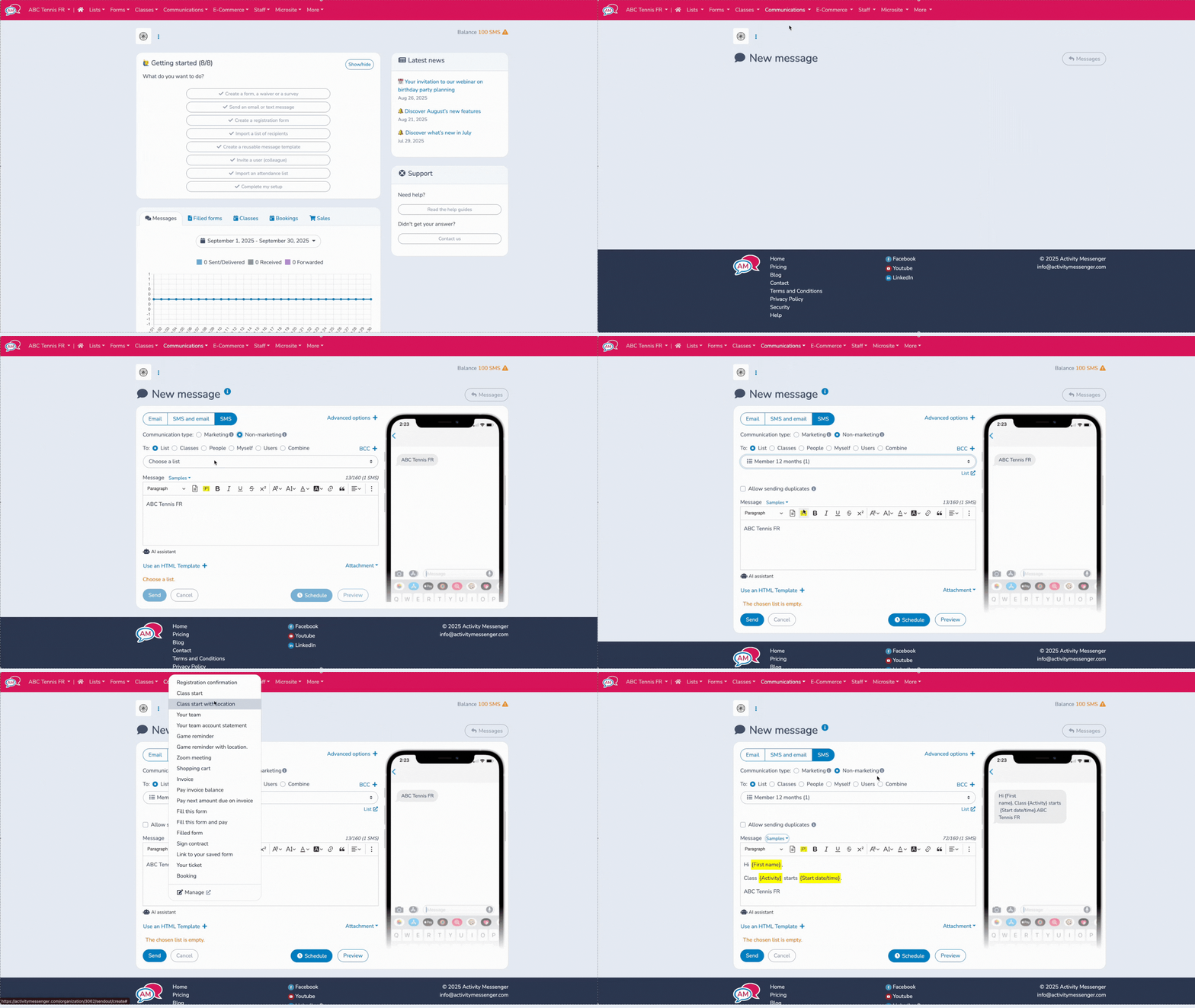
📌 Activity Messenger Tip: Email works well for detailed communication, but SMS has significantly higher open rates for time-sensitive reminders. Activity Messenger supports SMS, so you can reach members through the channel most likely to get a response. For example, a well-timed text the morning of a session can be the difference between a no-show and a member who shows up and stays engaged.
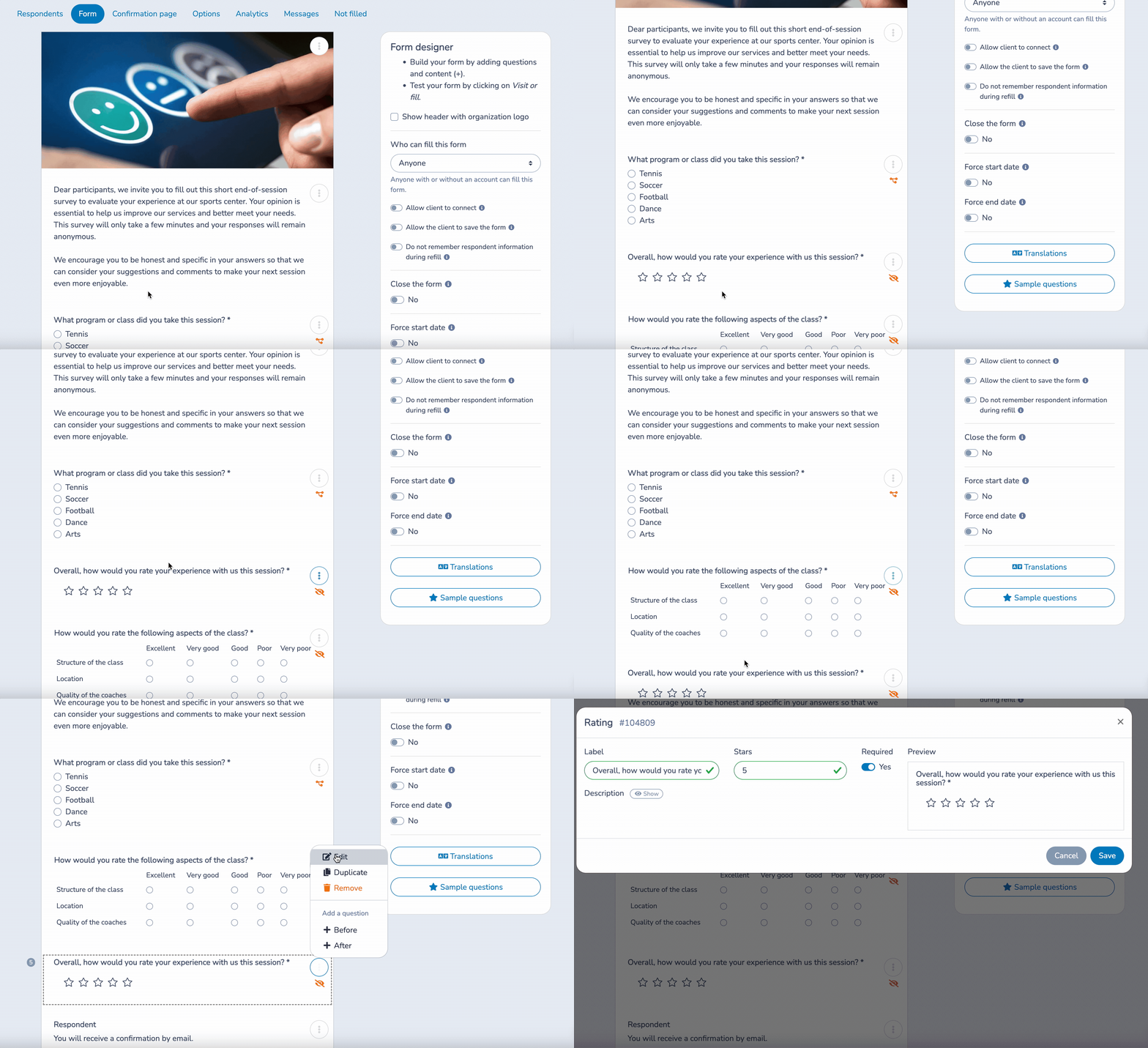
Feedback serves two purposes. The obvious one is the information itself: understanding what’s working, what isn’t, and where the experience could improve. But the less obvious purpose is equally important: asking for feedback signals to members that their opinion matters.
Effective feedback collection doesn’t need to be elaborate:
Keep surveys short. Three to five focused questions will get far more responses than a fifteen-question form.
Then, when members give you actionable feedback, close the loop by telling them what you changed as a result. That follow-through is what turns a routine survey into genuine trust.
📌 Activity Messenger Tip: Activity Messenger includes built-in survey tools that you can trigger automatically at the end of a program or session series. You can track satisfaction trends over time and spot issues before they become cancellations.
Relationships drive retention. Members who know other members, feel recognized by staff, and feel like they belong to something larger than a transaction are dramatically harder to lose.
Some of the most effective community-building approaches are also the simplest:
The goal is to make leaving feel like more than just cancelling a subscription. When members have real relationships within your community, the decision not to renew carries social weight, and many will reconsider.
By the time a member formally cancels, the decision has usually been made weeks or months earlier, back when they started attending less frequently, stopped opening your emails, or skipped a few sessions without explanation. The cancellation is just the paperwork.
Warning signs to watch for:
When you spot these patterns, reach out genuinely and personally. A short message acknowledging their absence, checking in, and making it easy to return is far more effective than a generic promotional email.
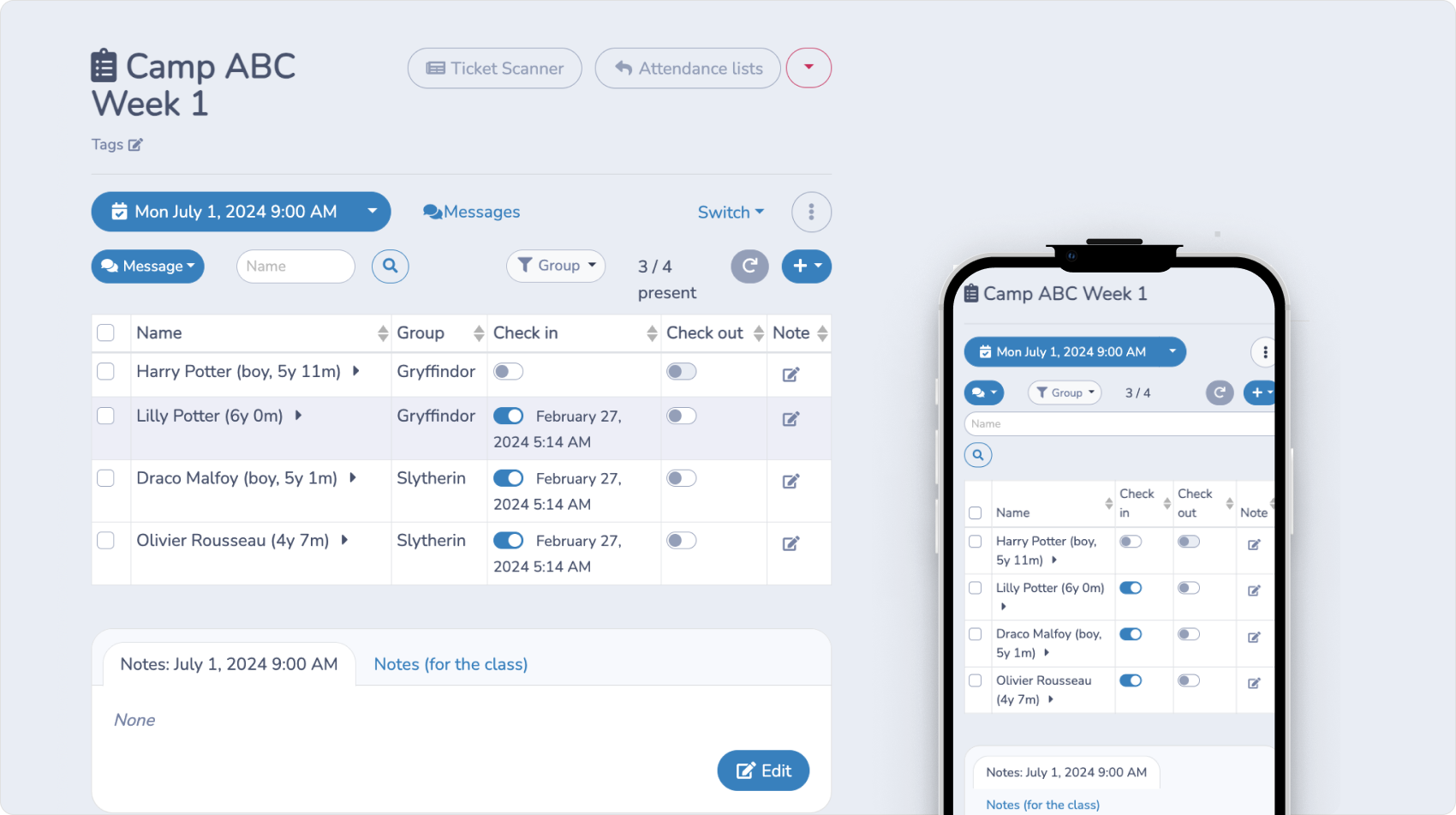
📌 Activity Messenger Tip: Activity Messenger’s attendance tracking tools give you visibility into participation patterns across your programs. You can identify members whose attendance is slipping and trigger automated follow-ups or flag them for a personal outreach from your team.
When the only options are “full membership” or “cancel,” a surprising number of people choose cancel — not because they want to leave, but because there’s no better option.
Flexibility in your membership structure reduces unnecessary cancellations.
Options worth considering:
Each of these options costs your organization less than losing the member entirely and spending resources to replace them.
📌 Activity Messenger Tip: Activity Messenger supports payment plans, prorated tuition, and promo codes natively within your registration forms, making it straightforward to offer flexible options without creating manual billing headaches for your team.

A well-timed re-engagement campaign can recover a meaningful portion of inactive members. A former member already knows your organization, has experienced your offerings, and requires far less convincing than a cold prospect.
An effective re-engagement sequence typically includes:
The tone throughout should be welcoming, not guilt-driven. For high-value long-term members, a personal phone call or handwritten note can be more effective than any automated email.
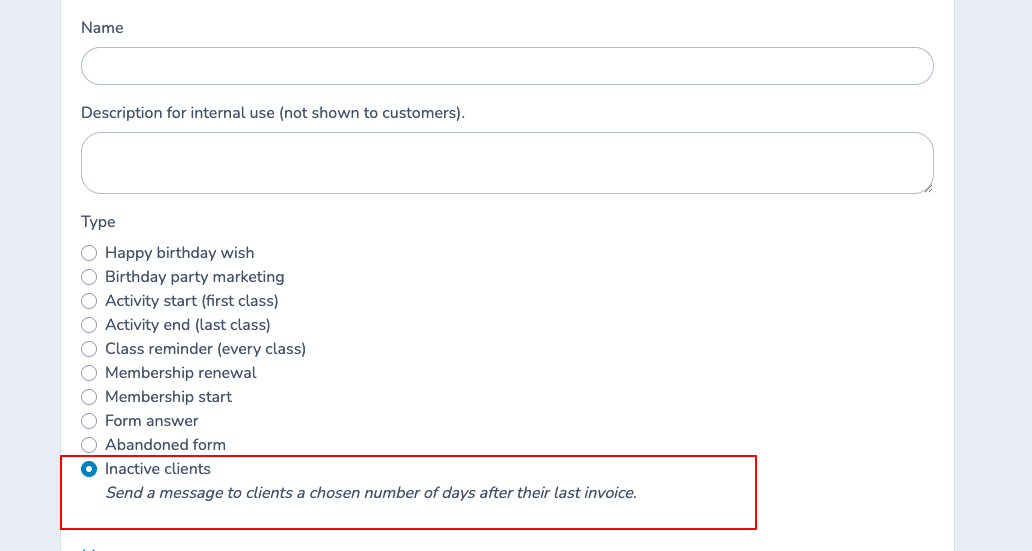
📌 Activity Messenger Tip: If someone hasn’t renewed their membership after a set period (for example, after one year), you can reach out with an automated, targeted message to welcome them back. Plus, you can exclude individuals who have already filled out other forms, just in case they registered for a different program.
Use this template as a starting point for your automated email:
Hi {First Name},
It’s hard to believe it’s been over a year since we last saw you at {Organization Name}. We hope you’ve been well.
A lot has happened since your last season with us:
- [Program update, new class, or facility improvement]
- [Upcoming event or seasonal highlight]
- [Community milestone]
As a returning member, we’d like to offer you [a discounted first month / a waived re-enrolment fee / a free trial class]. You can claim your returning member offer {here}.
If you have any questions or just want to hear more about what’s new, reply to this message or give us a call at {Phone Number}. We’re always happy to chat.
Hope to see you again soon,
{Staff Member Name}
{Organization Name}
Core challenge: Habit formation. New members who don’t build a consistent routine in the first 60 days rarely make it to renewal.
Core challenge: Scheduling clarity and family communication. Missed updates and last-minute changes frustrate families and quickly erode trust.
Core challenge: Perceived progress. Students who don’t feel like they’re advancing lose motivation, and their parents lose the justification for the cost.
Core challenge: The off-season gap. Re-registration requires an active decision made weeks or months after the last session, when your program may no longer be top of mind.
Run through this before your next renewal season to close the gaps:
Is joining and renewing easy?
Are you staying present between renewals?
Do new members get a real welcome?
Are members actually showing up and connecting?
Do members feel like they matter?
Are your systems working for you or against you?
Member retention refers to an organization’s ability to keep members engaged and renewing over time, rather than having them cancel or become inactive. It’s typically measured as the percentage of members who remain active from one period to the next.
Retention drives predictable, recurring revenue, reduces the cost and effort of continually acquiring new members, and builds a stronger, more engaged community over time. Long-term members are also more likely to refer others and provide valuable feedback.
This varies by industry and membership model. Many organizations aim for 70–90% annual retention. What matters most, however, is tracking your own trend over time and consistently working to improve it.
The most frequent reasons include lack of engagement, feeling disconnected from the community, poor or inconsistent communication, scheduling conflicts, perceived lack of value, and financial changes. A significant portion of non-renewals also comes down to something simpler: the renewal process was inconvenient, or the member simply forgot.
Automation ensures that the right communications (welcome messages, session reminders, check-ins after absences, re-engagement campaigns) reach members at the right time, without requiring manual effort from your team.
From day one. The onboarding experience, the first session, and the first week of membership all influence whether a member stays long-term. Retention isn’t something to address at renewal time, but something to build into every touchpoint from the moment someone signs up.
Member retention isn’t a single tactic: it’s the cumulative result of everything you do across the entire member journey.
A frictionless registration sets the right expectations. Structured onboarding turns a new sign-up into an engaged participant, consistent communication keeps your organization present in members’ lives, and early intervention saves members who are drifting before they decide to leave.
Activity Messenger is designed to support that workflow: combining registration, communication, automation, attendance tracking, and analytics into one platform so your team can spend less time on administration and more time on the experience that keeps members coming back.