Whether it’s notifying residents of emergency alerts, public meetings, or utility disruptions, texting for municipalities is proving to be a powerful tool for getting the word out quickly. The right software for municipalities can streamline the process and make it easier for administrators already juggling multiple tasks on a daily basis.
This guide covers everything your municipality or small town needs to know: the best use cases, how to build a compliant contact list, how to choose the right platform, and how to avoid the common mistakes that waste budget and erode resident trust.
Table of Contents
- Why SMS Works Better Than Email or Social Media for Municipal Communications
- 6 Proven Use Cases for Texting for Municipalities
- Legal Compliance: What Every Municipality Must Know (TCPA & CASL)
- How to Build and Maintain a Resident Contact List
- How to Segment Your Audience for Better Engagement
- How to Choose the Right Bulk SMS Platform
- Frequently Asked Questions: Texting for Municipalities
- Final Thoughts
Why SMS Works Better Than Email or Social Media for Municipal Communications
Email open rates for government communications hover around 47% on a good day. Organic social media reach has declined sharply across Facebook and Instagram, meaning even well-crafted posts may reach only a fraction of your followers.
SMS is different. Text messages have a 98% open rate, and most are read within 3 minutes. For time-sensitive communications (emergency alerts, service disruptions, last-minute cancellations), there is no faster or more reliable channel for reaching residents where they already are.
Texting for municipalities also removes friction. Residents don’t need to download an app, follow an account, or even have internet access. A text arrives on every mobile phone, period.
| Channel | Average Open Rate | Avg. Time to Read | Requires Internet |
|---|---|---|---|
| ~47% | Hours | Yes | |
| Facebook (organic) | 2–6% reach | Unpredictable | Yes |
| SMS | 98% | Under 3 minutes | No |
| Push notification | 50–60% | Minutes | Yes |

6 Proven Use Cases for Texting for Municipalities
Emergency Notifications
When emergencies strike (floods, wildfires, severe snowstorms, boil-water advisories, or gas leaks), SMS is one of the most dependable ways to reach residents quickly. Unlike email or social posts, a text doesn’t require the recipient to open an app or check their inbox. A well-timed emergency alert can protect lives and reduce panic.
Example message:
“CITY OF GREENWOOD ALERT: Boil water advisory in effect for the north end (postal codes N2A–N2C). Do not drink tap water until further notice. Visit [website link] for updates. Reply STOP to opt out.”
Service Disruptions
Planned and unplanned utility interruptions (electricity, water, waste collection) frustrate residents most when they arrive without warning. A short SMS sent 24–48 hours before a disruption, with a clear timeline, dramatically reduces calls to city hall and improves public trust.
Public Meeting and Event Reminders
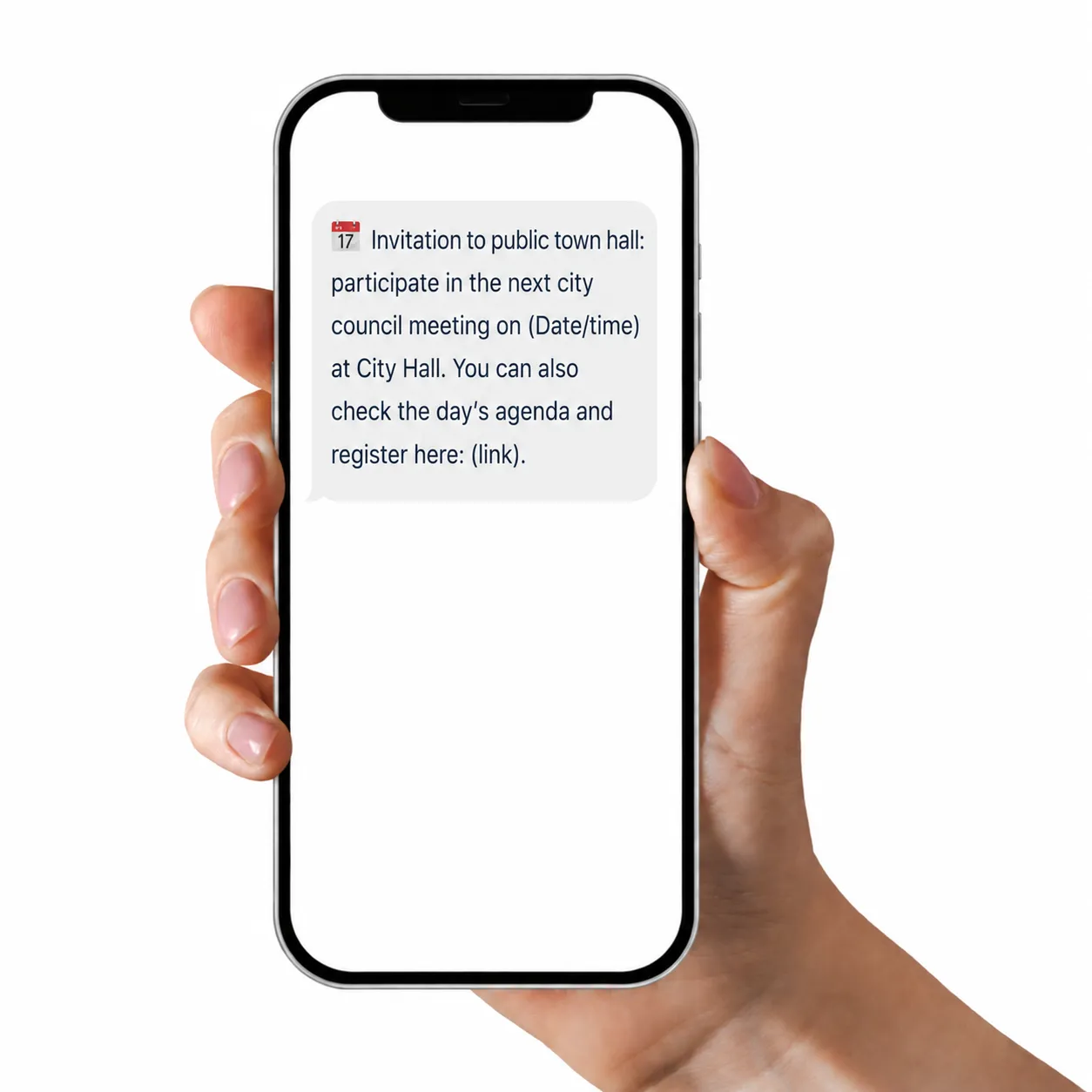
Low turnout at public consultations and town hall meetings is a persistent challenge. An SMS reminder sent the morning of an event, especially one that includes a direct link to an agenda or registration page, consistently lifts attendance.
Administrative Deadlines
Property tax deadlines, permit renewals, dog license renewals, and parking permit expirations are easy for residents to miss. Automated SMS reminders sent 7 and 2 days before a deadline reduce late fees, reduce staff workload, and improve resident satisfaction scores.
Program and Class Cancellations
Parks and recreation departments deal with last-minute cancellations constantly (weather, facility issues, instructor illness). SMS lets staff notify registered participants within minutes, saving families an unnecessary trip and reducing angry phone calls to your front desk.
Community Engagement Campaigns
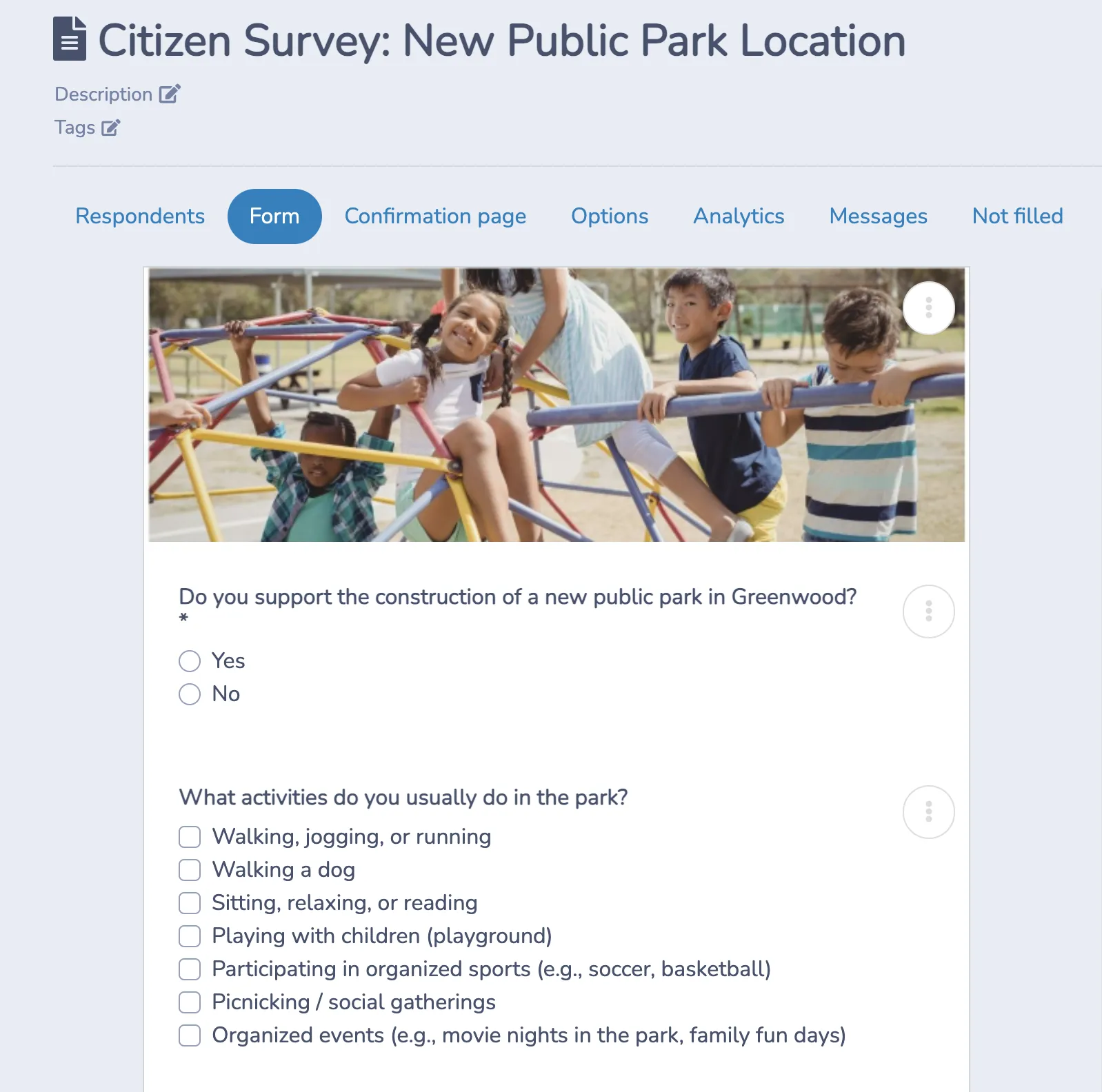
Want residents to weigh in on a new park design or a proposed bylaw? Use SMS to share a survey link, promote a public consultation, or drive traffic to a feedback portal. Short, direct messages see significantly higher engagement than social posts or email blasts for these purposes.
📌 Pro tip: Mass texting is powerful precisely because it’s rare. Limit non-emergency texts to 2–4 per month so residents don’t tune you out. For lower-priority updates, a monthly email newsletter is a better fit.
Legal Compliance: What Every Municipality Must Know (TCPA & CASL)
Whether you’re in the United States or Canada, bulk text messaging is governed by law. Violating these rules can result in fines and reputational damage, so it’s worth understanding the basics before you send a single message.
In the United States: TCPA
The Telephone Consumer Protection Act (TCPA) requires that you obtain prior express written consent before sending marketing or non-emergency texts to residents. Key requirements:
- Residents must actively opt in (a pre-checked box does not count)
- Every message must include a clear opt-out mechanism (e.g., “Reply STOP to unsubscribe”)
- You must honour opt-out requests promptly
- Emergency alerts are generally exempt from TCPA consent requirements, but best practice is to still provide an opt-out
In Canada: CASL
Canada’s Anti-Spam Legislation (CASL) applies to commercial electronic messages, which can include certain municipal communications. Key rules:
- Express or implied consent is required before sending
- Every message must identify the sender and provide a way to unsubscribe
- Consent records must be maintained and available for audit
Best Practices for Any Municipality
- Always use a double opt-in process where possible
- Store consent timestamps and method (e.g., “opted in via website form on March 3, 2026”)
- Make the opt-out process effortless (a one-word reply like “STOP” is the standard)
- Review your platform’s compliance tools: look for built-in consent logging and auto-unsubscribe handling
Sample opt-in disclaimer: “By signing up, you agree to receive text updates from the City of Greenwood. Message and data rates may apply. Reply STOP to unsubscribe at any time.”
How to Build and Maintain a Resident Contact List
Your messages are only effective if they reach the right people. Building a quality list is arguably the most important step in any SMS strategy.
Ways to collect resident phone numbers:
- Online Forms: Add SMS opt-in checkboxes to existing forms on your municipal website.
- Event Registrations: Offer SMS reminders when residents sign up for events or programs.
- Public Kiosks & QR Codes: Set up SMS registration booths at town hall, libraries, and recreation centers.
- Utility Bills & Mailers: Include QR codes or shortcodes to opt in via text message.
- Social Media: Promote sign-up forms or text-to-join campaigns via Facebook, Instagram, or X (formerly Twitter.)
How to keep things up to date:
- Remove numbers that consistently fail to deliver (hard bounces)
- Immediately remove anyone who opts out (your platform should do this automatically)
- Periodically reconfirm consent for lists that haven’t been contacted in 12+ months
How to Segment Your Audience for Better Engagement
Blanket messaging to all residents creates noise. Segmentation ensures every message feels relevant, which keeps opt-out rates low and engagement rates high.
- By geography: Group residents by neighbourhood, ward, or postal code. A water main break on the west side doesn’t need to reach everyone — targeted messaging is more trusted and less disruptive.
- By interest: Let residents choose the categories they care about: emergencies only, parks and recreation, public works updates, council meeting notices. People who self-select into a list are far more engaged.
- By language: Send messages in residents’ preferred language. This is especially important for municipalities with large francophone, Indigenous, or newcomer communities.
- By department: Parks & Rec, Public Works, City Council, and Building Services can each maintain their own lists, keeping communications organized and on-brand.
How to Choose the Right Bulk SMS Platform
Not all SMS platforms are built for local government. A tool designed for e-commerce marketing will be missing the features municipalities actually need. Here’s what to look for:
- 🖥️ User-friendly dashboard: Your communications coordinator shouldn’t need IT support to send a message. Look for a clean, intuitive interface that requires minimal training.
- 👥 Contact list management: The ability to easily import, segment, and maintain resident lists, including bulk imports from spreadsheets or your existing recreation management system.
- ⏰ Automation and scheduling: Set up recurring reminders (e.g., weekly program reminders, pre-deadline tax notices) once and let them run. Scheduling lets you write messages in advance for off-hours delivery.
- 📝 Message templates: Pre-built templates for common scenarios (emergency alerts, service disruption notices, event reminders) save time and ensure consistency.
- ✅ Compliance tools: Built-in consent logging, auto-unsubscribe handling, opt-in verification, and audit-ready records. Non-negotiable.
- 💬 Two-way messaging: Some platforms allow residents to reply, which is useful for RSVPs, simple survey responses, or routing enquiries to the right department.
- 📊 Reporting and analytics: Delivery rates, open rates (where available), and opt-out trends help you understand what’s working and adjust accordingly.
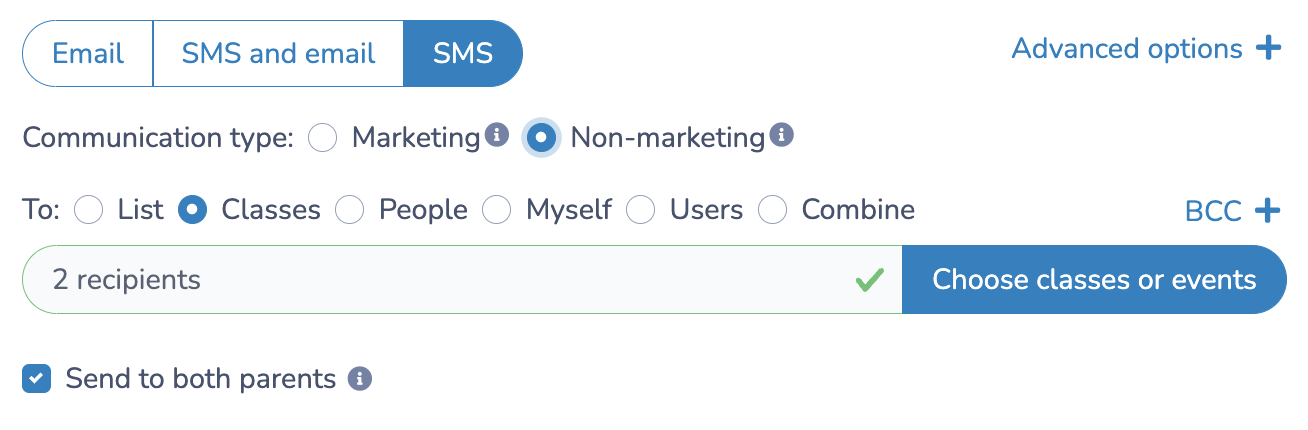
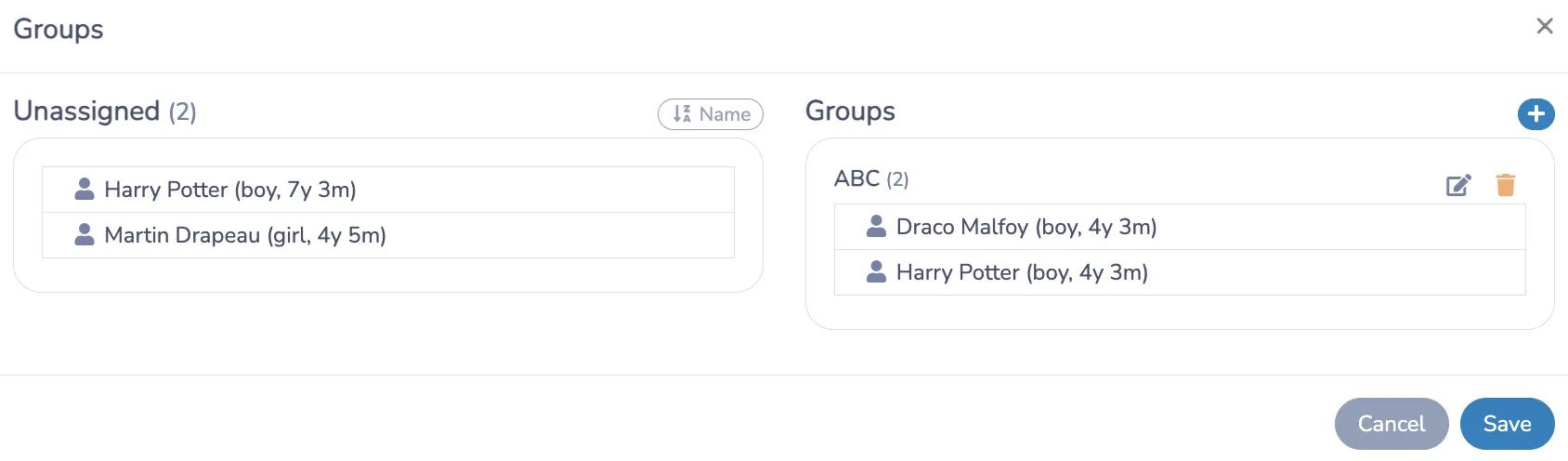
🏛️ Activity Messenger is a complete parks and recreation software solution, designed to help manage activities, surveys, facilities, memberships, and communications for your municipality or small town. See how we use bulk SMS to streamline communications, or book a demo for a personalized walkthrough.
Frequently Asked Questions: Texting for Municipalities
Is bulk texting legal for municipalities?
Yes, with the right consent framework in place. In the US, the TCPA requires opt-in consent for non-emergency messages. In Canada, CASL governs commercial electronic messages. Emergency alerts are generally treated differently and may not require the same consent process. Always consult your municipal solicitor if you’re unsure how the rules apply to your specific communications.
How do we get residents to opt in?
The most effective approach is to embed SMS opt-ins into forms residents already fill out, like recreation registrations, utility setups, and permit applications. Pair this with a clear value message: “Opt in to receive emergency alerts and service updates by text.” Keep it low-commitment: residents should be able to join or leave easily.
How often should we text residents?
For non-emergency communications, 2–4 times per month is a reasonable maximum. Over-texting is the fastest way to increase opt-out rates. Use email newsletters for lower-urgency updates and reserve SMS for time-sensitive, high-value messages.
Can we use SMS for two-way communication?
Many platforms support two-way messaging, which allows residents to reply with simple responses (e.g., “1 for yes, 2 for no”). This is useful for quick surveys, RSVP confirmations, and routing general enquiries. Full conversational SMS support (like a live chat) is more complex and not widely used in municipal contexts.
What happens if a resident replies STOP?
Any CASL- and TCPA-compliant platform will automatically remove them from your list upon receiving a STOP reply. You must honour opt-out requests immediately and cannot re-add someone to a list without obtaining new consent.
Does SMS work for smaller towns with limited budgets?
Absolutely. In fact, smaller towns often see the highest ROI (return on investment) from SMS programs because residents expect more direct communication from local government, and per-message costs at lower volumes are very manageable. Many small municipalities start with a basic plan and scale as their needs grow.
Final Thoughts
Texting for municipalities is no longer a nice-to-have; it’s becoming an expected part of how local governments communicate with the people they serve. Residents are busy, inboxes are full, and the bar for reaching someone has never been higher.
The municipalities that get this right are the ones that build their programs thoughtfully: with proper consent, smart segmentation, relevant content, and the right platform.
Activity Messenger helps municipalities and small towns across North America communicate more effectively using mass SMS, email, registrations, and more.
📅 Book a free demo with one of our experts to see how Activity Messenger can benefit your municipality or recreation department today.
📖 Related Reading: